Category: Treatment Options

A sleep apnea diagnosis is not the end of the story — it’s the beginning of improvement.

Many people assume treatment only means wearing a CPAP machine for life. In reality, there are multiple options depending on the severity, cause, and individual anatomy involved.

In this category, we explore the full spectrum of treatment approaches — from CPAP therapy and oral appliances to weight management, positional therapy, surgical options, and emerging technologies. We explain how each works, who it’s best suited for, and what realistic results look like.

Because treating sleep apnea isn’t just about reducing snoring — it’s about restoring deep sleep, protecting your heart and brain, and getting your energy back.

CPAP filters: the small component that protects your therapy


When people think about CPAP equipment, they usually focus on machines, masks, tubing, and humidifiers. One of the most important components of the entire system often goes unnoticed: the CPAP filter.

Although small and inexpensive, filters play a critical role in protecting both the user and the machine. They help remove dust, pollen, pet dander, airborne particles, and other contaminants before the air reaches the PAP device and ultimately the user’s airway.

(more…)
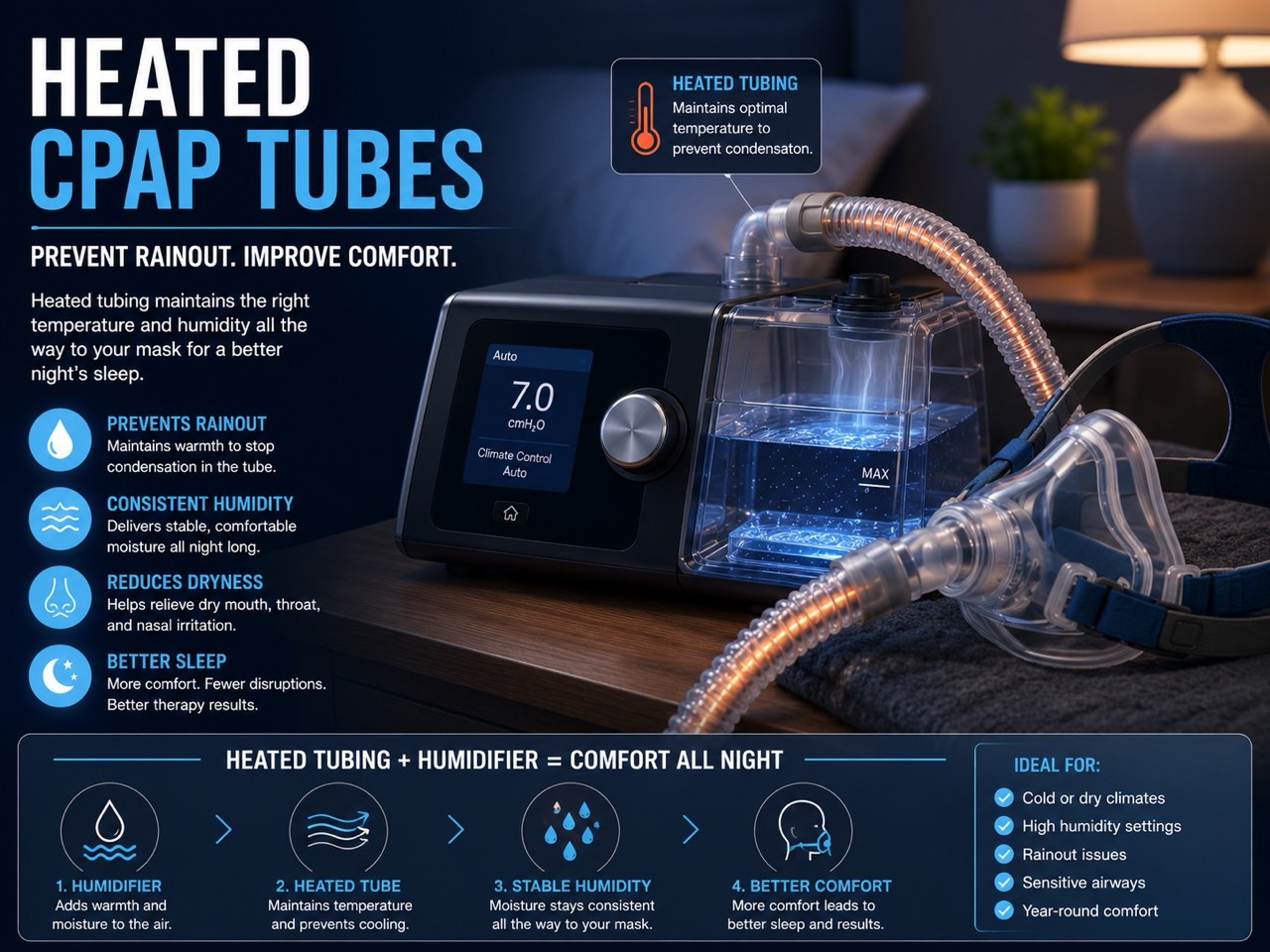
Heated CPAP tubes: preventing rainout and improving therapy comfort


Modern PAP therapy has become increasingly comfortable thanks to innovations designed to improve airflow quality and reduce common side effects. One of the most useful advancements is the heated CPAP tube, also known as a heated hose.

While heated humidifiers add moisture to therapy air, heated tubing helps maintain that moisture all the way from the machine to the mask. Together, these technologies reduce dryness, improve comfort, and help prevent one of the most common PAP frustrations: rainout.

(more…)

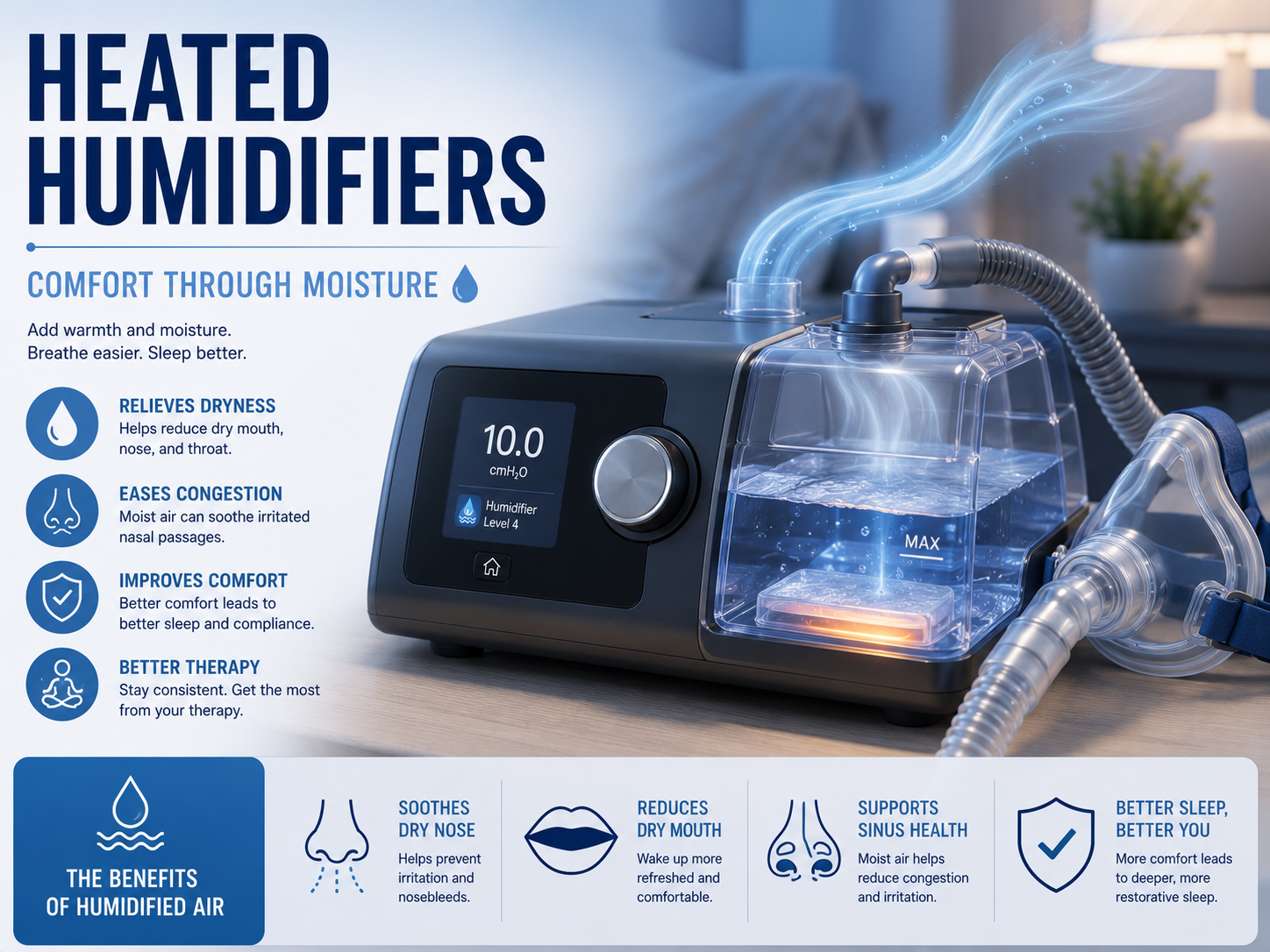
Heated humidifiers: improving comfort during CPAP therapy


For many people, the biggest challenge of PAP therapy is not the machine itself—it’s the side effects of breathing pressurized air throughout the night. Dry mouth, nasal irritation, congestion, sore throat, and discomfort are among the most common complaints reported by CPAP users.

Fortunately, modern PAP systems often include a solution: heated humidification.

(more…)

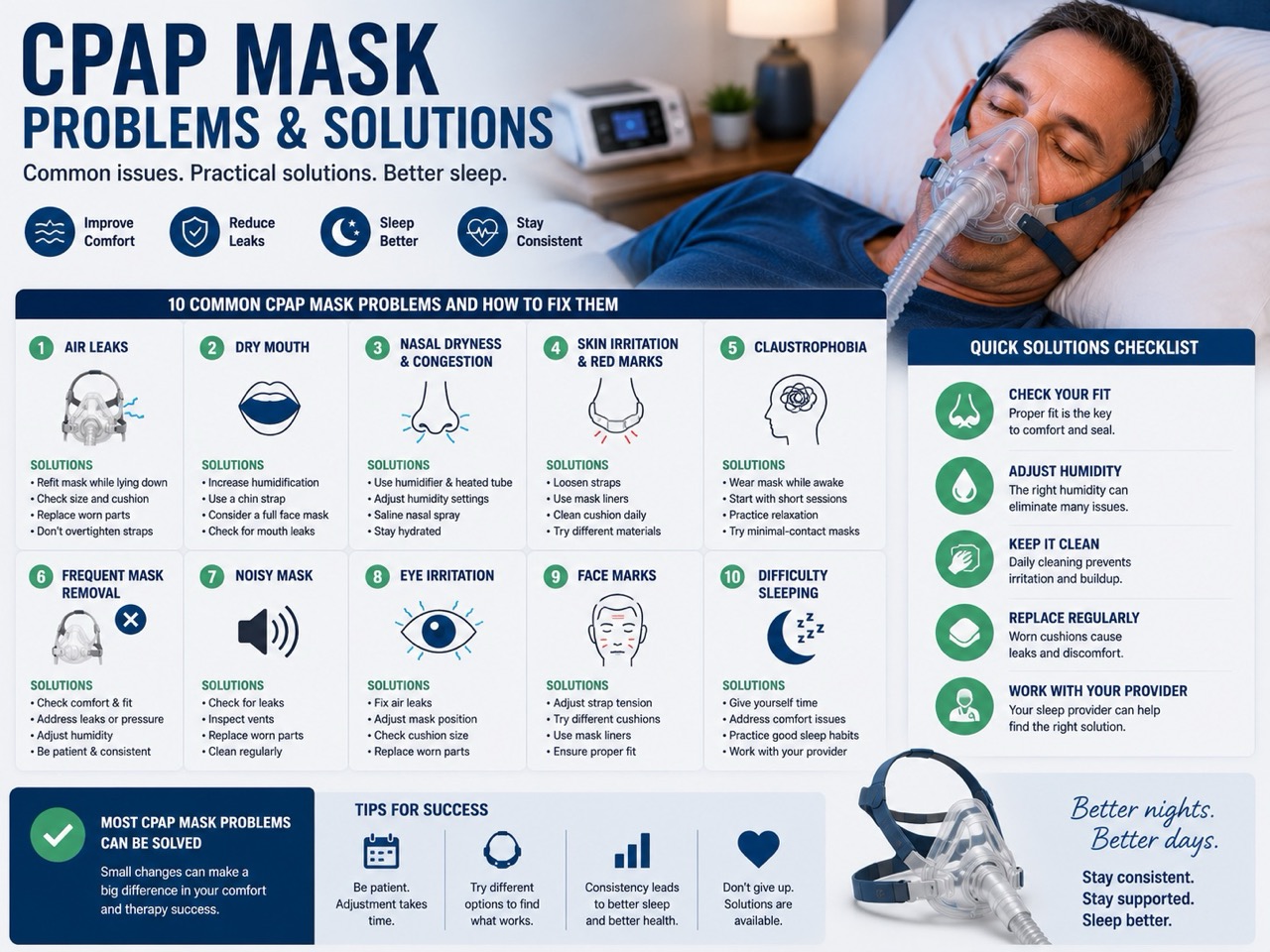
CPAP mask problems and solutions: fixing the most common therapy issues


Starting PAP therapy can be life-changing, but adapting to a CPAP mask is not always easy. Even patients who are highly motivated to improve their sleep sometimes encounter challenges that affect comfort, sleep quality, or treatment effectiveness.

The good news is that most CPAP mask problems can be solved. In many cases, small adjustments to mask fit, humidity settings, sleeping position, or equipment selection can dramatically improve comfort and therapy success.

(more…)

How to choose the right CPAP mask: a complete guide for sleep apnea patients


Choosing the right CPAP mask is one of the most important decisions a sleep apnea patient will make. While modern PAP machines are highly advanced, even the most sophisticated device can become ineffective if the mask is uncomfortable, leaks excessively, or prevents consistent nightly use.

In fact, many therapy challenges are not caused by the machine itself but by an improperly selected mask.

(more…)

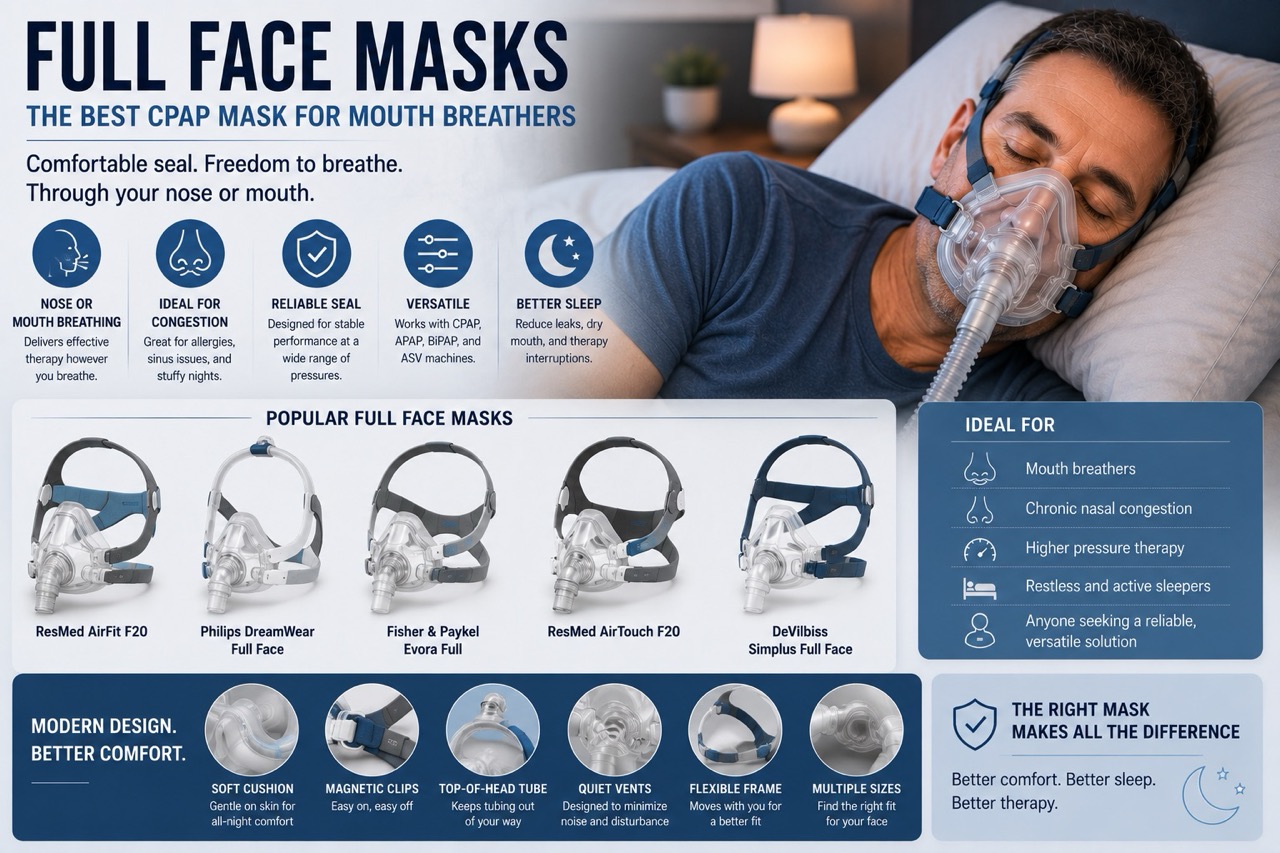
Full face masks: the best CPAP mask for mouth breathers


For many sleep apnea patients, PAP therapy becomes much easier once they find the right mask. While nasal masks and nasal pillow masks are excellent options for many users, they rely heavily on the ability to breathe comfortably through the nose.

For people who frequently breathe through their mouths during sleep, suffer from chronic nasal congestion, or require higher therapy pressures, a full face mask may be the most effective solution.

(more…)

Nasal pillow masks: minimal contact, maximum freedom


For many people starting PAP therapy, one of the biggest concerns is the mask itself. Traditional masks can appear bulky, restrictive, or intimidating, leading some patients to worry about comfort and long-term use.

Nasal pillow masks were developed to solve many of these concerns. Instead of covering the nose or the entire face, these ultra-minimal interfaces use small soft cushions that rest directly at the nostrils, delivering therapy with remarkably little facial contact.

(more…)

Nasal masks: the most popular CPAP mask for sleep apnea therapy


When people think of CPAP therapy, the image that often comes to mind is a nasal mask. For decades, nasal masks have been one of the most widely prescribed and most successful interfaces used in positive airway pressure therapy.

Offering an effective balance between comfort, stability, and performance, nasal masks are often recommended as a first choice for new CPAP users. While they may not be ideal for everyone, they remain one of the most versatile and effective options available for treating sleep apnea.

(more…)

CPAP masks: choosing the right interface for comfortable and effective therapy


Even the most advanced CPAP, APAP, BiPAP, or ASV machine can only be effective if the user wears it consistently. While pressure settings and machine technology are important, many sleep specialists agree that mask comfort is often the single most important factor determining long-term treatment success.

A properly fitted mask can mean the difference between restful sleep and abandoning therapy altogether. Fortunately, modern sleep medicine offers a wide range of mask designs, sizes, and configurations to accommodate different sleeping styles, facial structures, and personal preferences.

(more…)

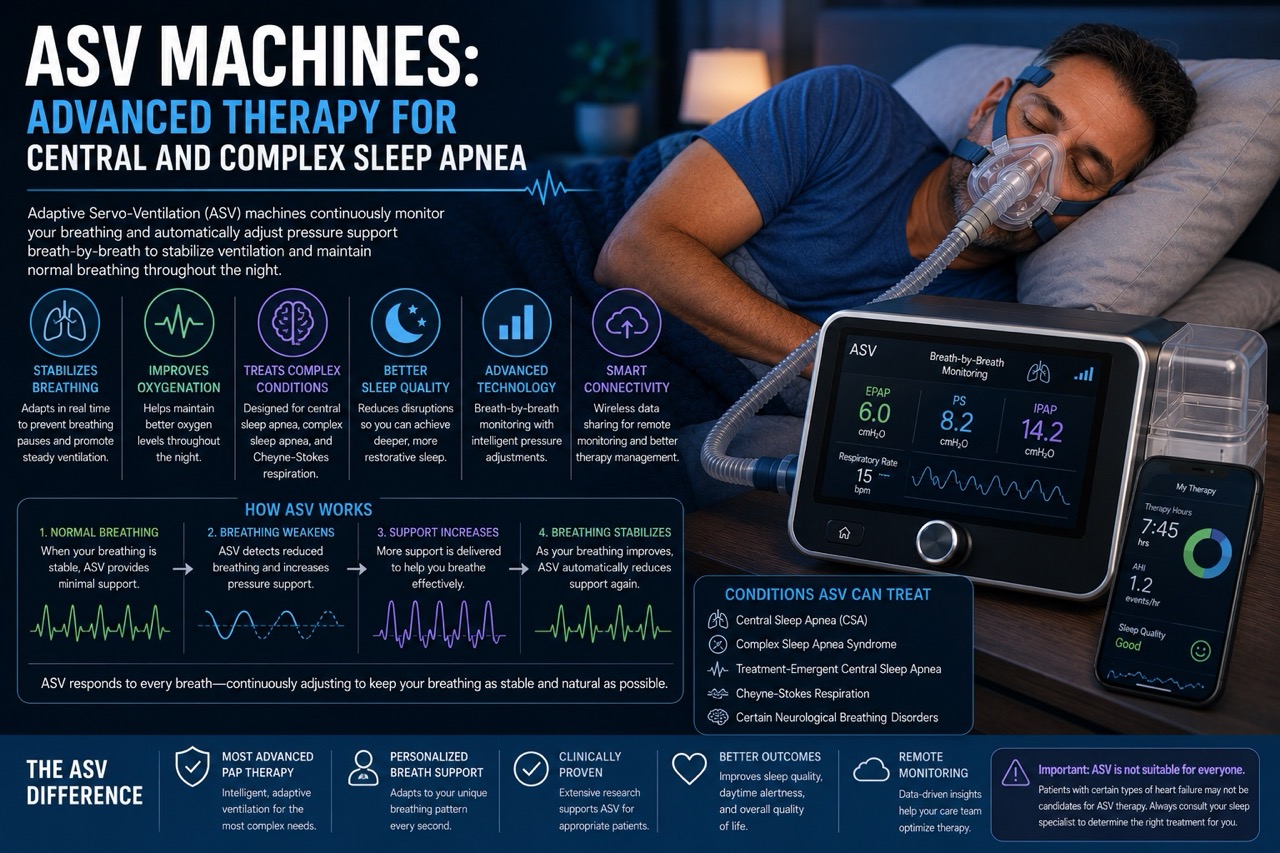
ASV machines: advanced therapy for central and complex sleep apnea


While CPAP, APAP, and BiPAP therapies successfully treat millions of people with obstructive sleep apnea, some patients experience breathing disorders that require a more sophisticated approach. For these individuals, Adaptive Servo-Ventilation (ASV) may provide the most advanced form of non-invasive sleep breathing support available today.

ASV technology continuously monitors every breath and automatically adjusts pressure support in real time. Unlike traditional PAP therapies that primarily prevent airway collapse, ASV actively responds to unstable breathing patterns and helps maintain normal ventilation throughout the night.

(more…)