Category: Self-Testing & Tools

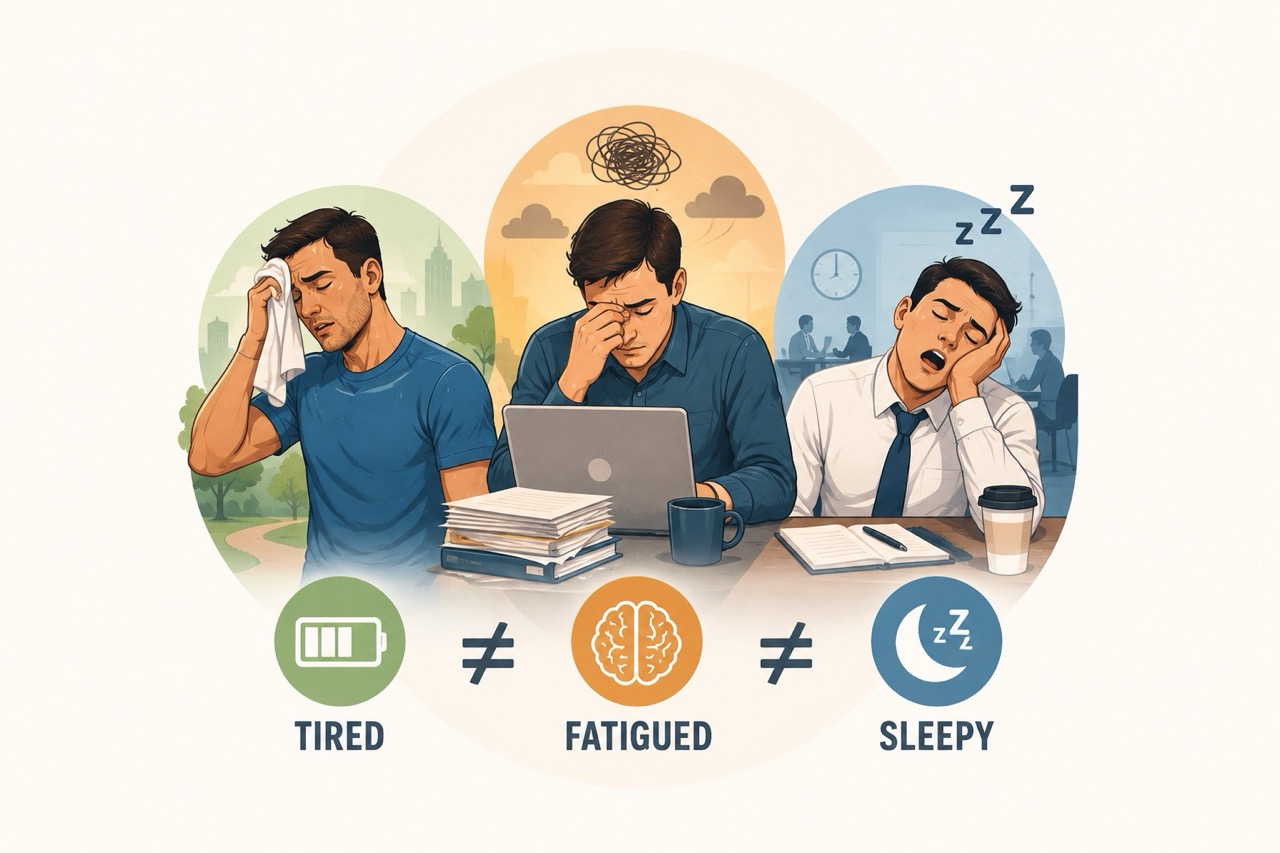
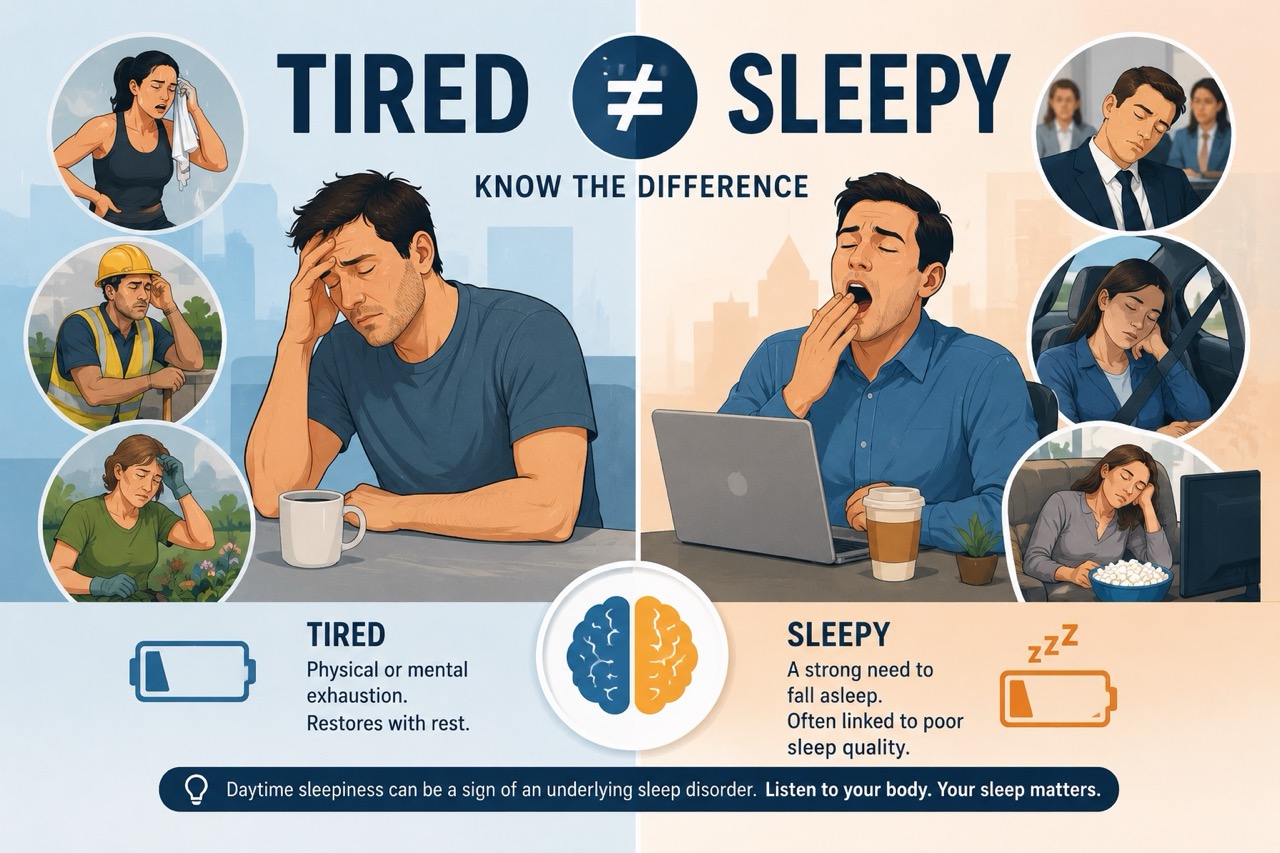
Many people live with sleep apnea for years without knowing it. The symptoms can feel subtle — morning headaches, constant fatigue, brain fog, irritability — and are often blamed on stress, aging, or a busy life.

The good news? You don’t always need to start in a sleep lab.

In this category, we explore practical ways to assess your risk at home, understand common screening tools, interpret warning signs, and learn when professional testing is necessary. From simple questionnaires to wearable devices and home sleep tests, we break down what’s useful, what’s misleading, and how to take the next step with confidence.

Because the first step to better sleep is knowing whether you have a problem.

Which sleep disorder might you have? (Simple decision guide)


Many people live for years with untreated sleep disorders because the symptoms overlap — fatigue, brain fog, irritability, poor focus.

This simple step-by-step guide helps you narrow down what might be happening based on your dominant symptoms.

This is not a diagnosis — but it can point you in the right direction.

(more…)

Overnight pulse oximeter — is it useful for detecting sleep apnea?


An overnight pulse oximeter is a small device worn on the finger to monitor oxygen saturation during sleep.

Because sleep apnea causes repeated drops in oxygen levels, many people wonder:

Can an overnight oximeter detect sleep apnea?

The answer is nuanced.

An oximeter can provide useful clues — but it cannot confirm the diagnosis on its own.

(more…)

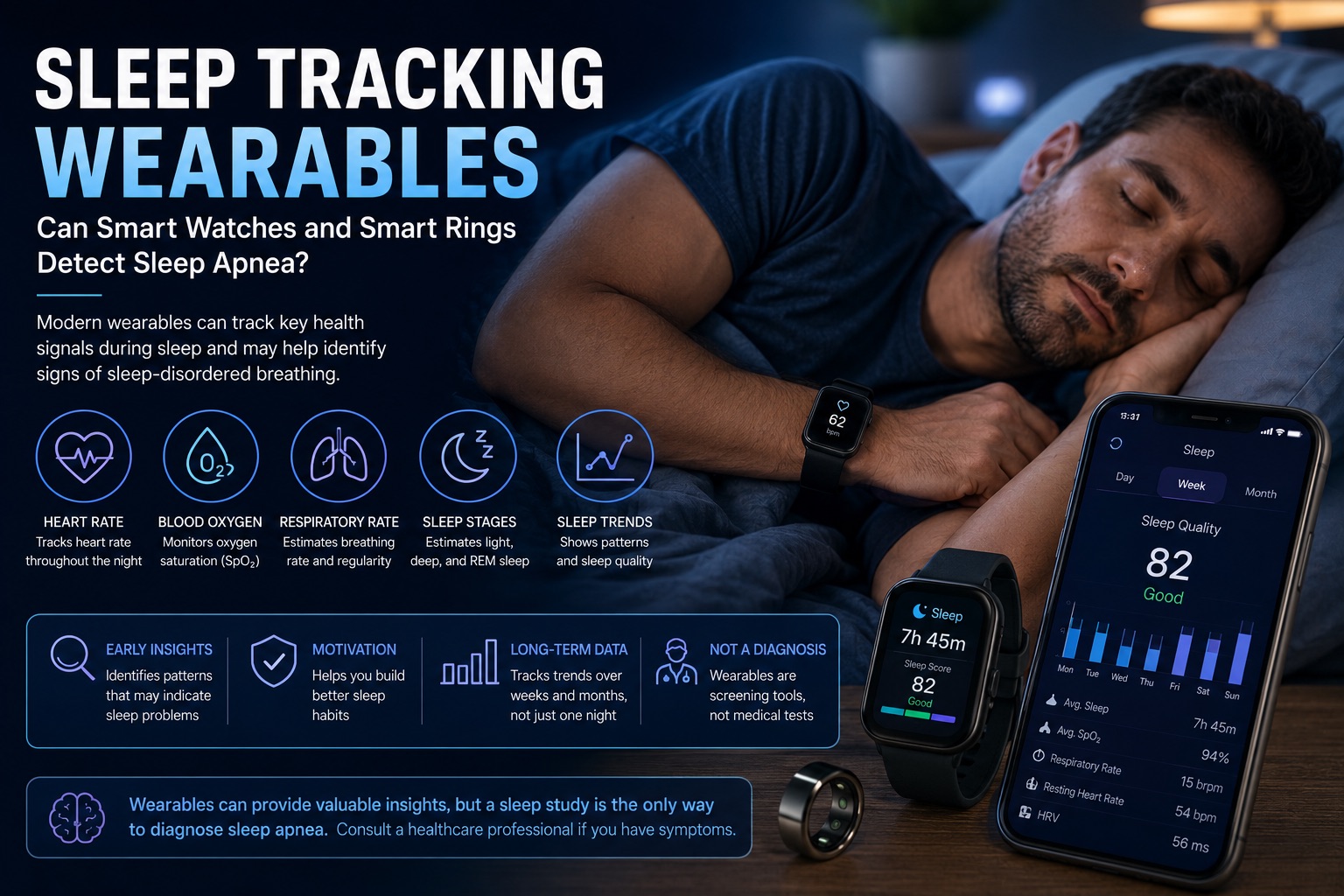
Can a smartwatch detect sleep apnea? What modern devices can and cannot do


Modern smartwatches track:

  • Heart rate
  • Oxygen levels
  • Sleep duration
  • Movement
  • Snoring (in some models)

This raises a common question:

Can a smartwatch detect sleep apnea?

The short answer:

It can raise suspicion — but it cannot diagnose sleep apnea.

Understanding the difference is important.

(more…)

The STOP-BANG questionnaire explained — how doctors screen for sleep apnea risk


When clinicians suspect sleep apnea, they often begin with a structured screening tool.

One of the most widely used tools worldwide is the STOP-BANG questionnaire.

It is simple, quick, and evidence-based.

It does not diagnose sleep apnea — but it helps identify who is at higher risk and should undergo formal testing.

(more…)

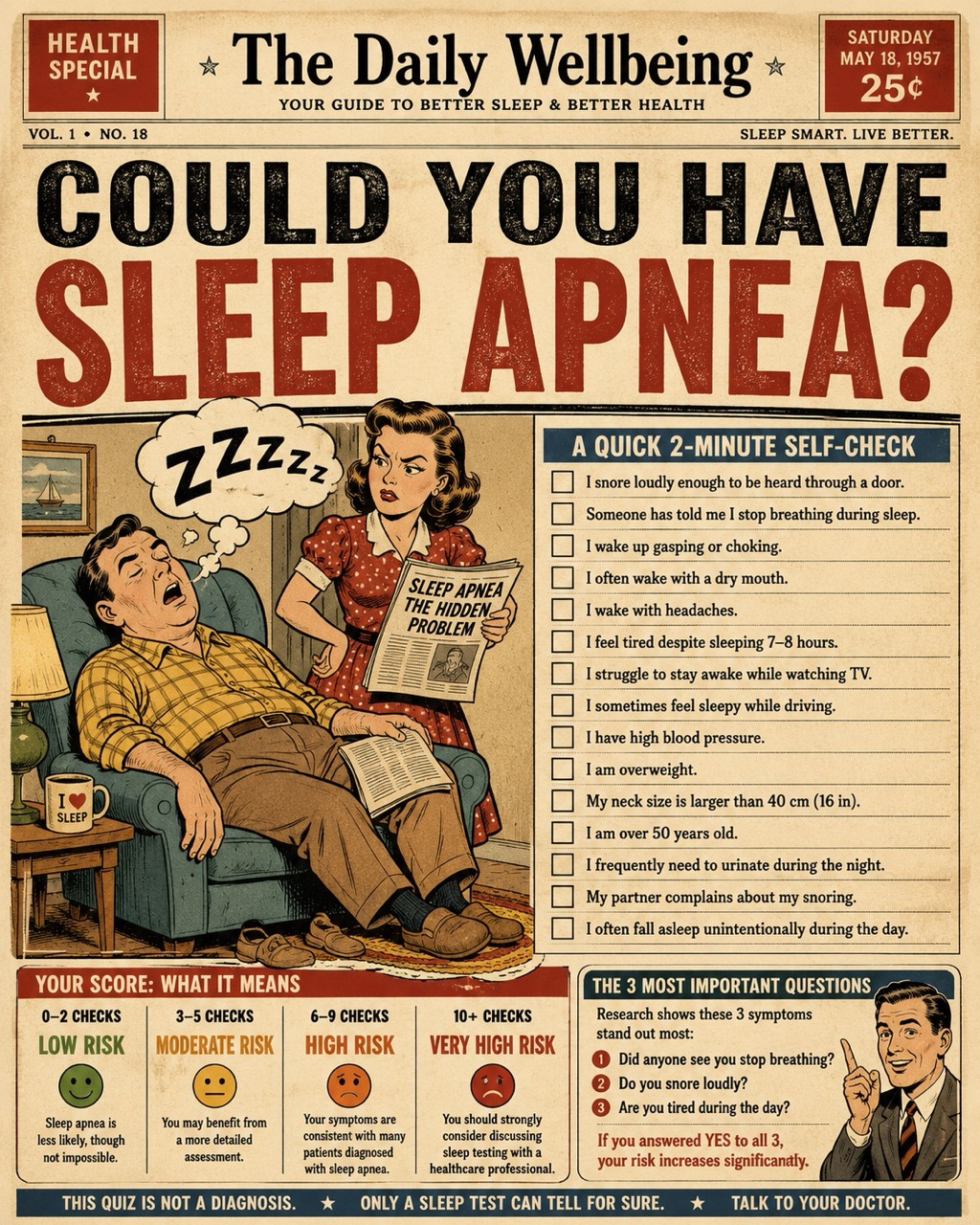
A practical self-check guide


Many people live for years with undiagnosed sleep apnea.

They assume they are simply tired, stressed, or getting older.

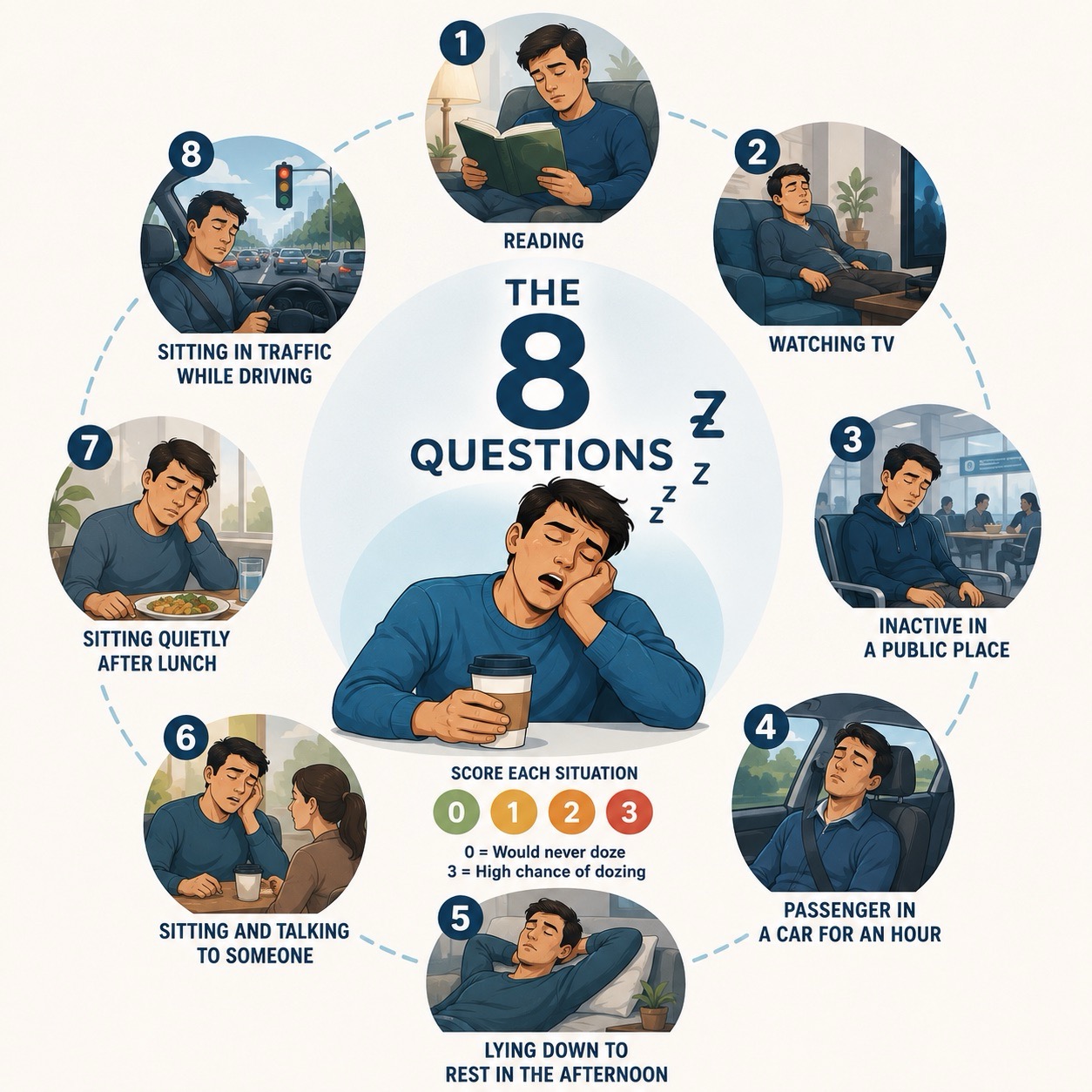
If you are wondering whether your sleep is truly restorative, this practical self-check guide can help you identify warning signs.

This is not a diagnosis. It is a structured way to evaluate your risk before seeking medical testing.

(more…)