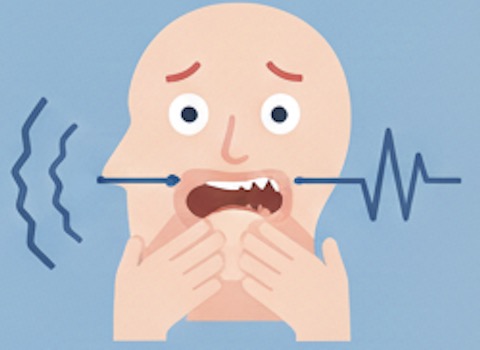
Teeth grinding at night (bruxism) — could your jaw be reacting to breathing problems?
You wake up with jaw tension.
Your teeth feel sensitive.
You may have headaches near your temples.
Your dentist tells you that you grind your teeth at night.
Teeth grinding — known as bruxism — is often blamed on stress.
But in some people, nighttime grinding may be linked to disrupted breathing during sleep.
What is bruxism?
Bruxism is involuntary clenching or grinding of the teeth, usually during sleep.
It can cause:
• Jaw soreness
• Tooth wear
• Cracked enamel
• Headaches
• Neck pain
Many people are unaware they grind their teeth until a dentist notices the damage.
How could breathing be involved?
During obstructive sleep apnea:
• The airway narrows or collapses
• Oxygen levels drop
• The brain briefly activates
• Muscles suddenly engage
Research suggests that jaw muscle activation may occur during these micro-awakenings.
In some cases, clenching may be a reflex attempt to:
• Reposition the jaw
• Open the airway
• Restore airflow
In simple terms:
The jaw may be reacting to breathing instability.
Why stress is not always the full explanation
Stress can certainly contribute to bruxism.
However, when grinding occurs alongside:
• Loud snoring
• Dry mouth
• Morning headaches
• Night sweats
• Frequent awakenings
• Daytime fatigue
It raises the possibility that breathing disruption is part of the picture.
Dentists are increasingly aware of the connection between airway health and dental wear patterns.
Why this matters
Nightly grinding does more than damage teeth.
It may signal:
• Fragmented sleep
• Repeated micro-arousals
• Increased sympathetic activation
• Hidden airway obstruction
If the underlying breathing issue is not addressed, a mouthguard alone may protect teeth — but not improve sleep quality.
Can treatment help?
When breathing stabilizes during sleep:
• Micro-awakenings decrease
• Jaw muscle activation may reduce
• Sleep becomes more restorative
Some patients notice improvement in grinding after treating sleep apnea.
Others may still require dental protection — but with better overall sleep.
When to seek evaluation
Consider discussing sleep health if:
• Bruxism is severe or worsening
• You snore regularly
• You wake up tired despite adequate sleep
• Headaches occur frequently in the morning
Sometimes the jaw is not the root problem.
It may be reacting to what is happening in the airway.
Teeth grinding can look like a dental issue.
But in some cases, it is a nighttime signal.
The jaw may be trying to solve a breathing problem you did not know you had.