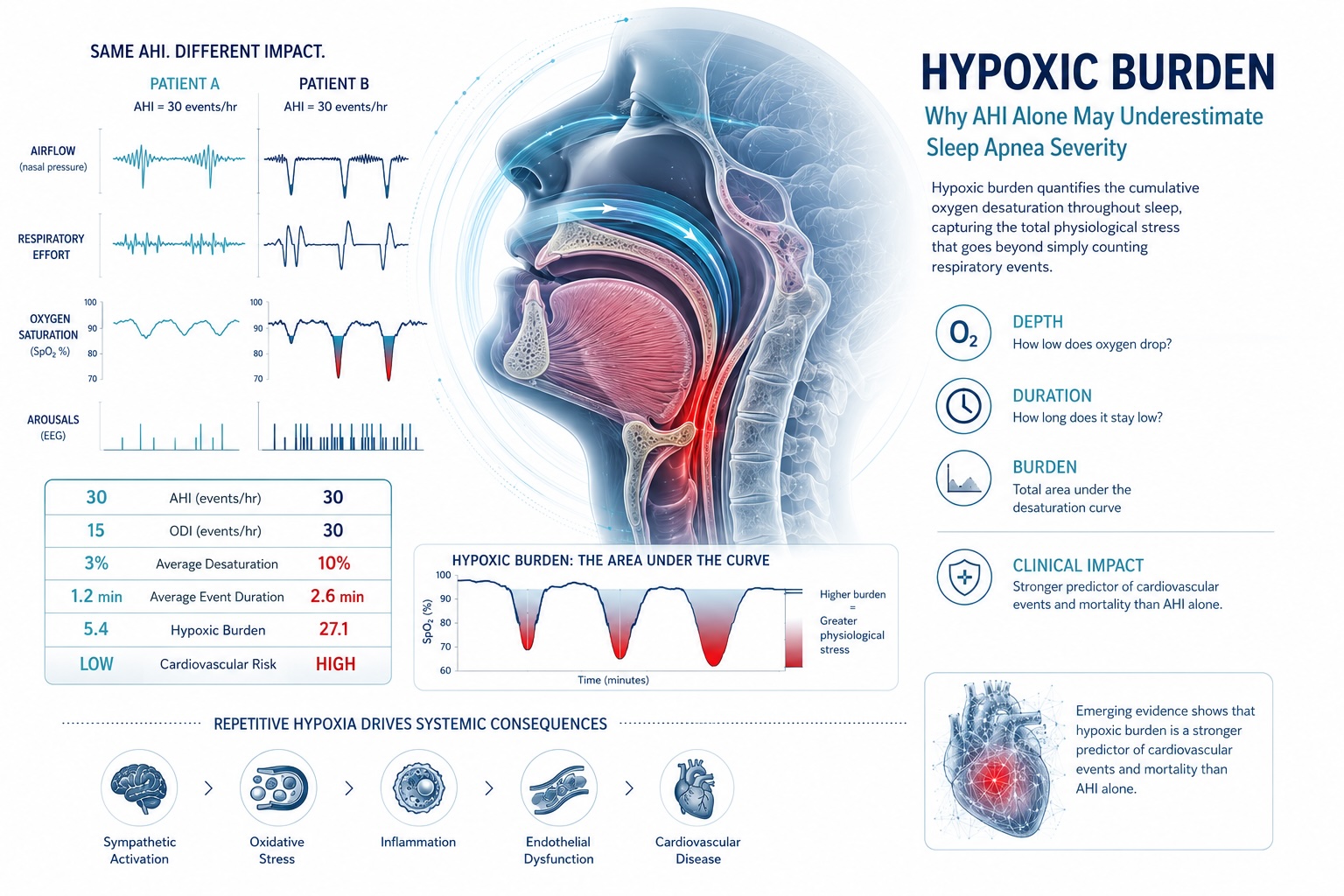
For decades, obstructive sleep apnea (OSA) severity has been defined primarily by the Apnea-Hypopnea Index (AHI), a measure that counts the average number of respiratory events per hour of sleep.
Although AHI remains the foundation of diagnosis and treatment decisions, researchers increasingly recognize that event frequency alone may not accurately reflect the true physiological consequences of sleep-disordered breathing.
A patient with frequent but mild respiratory events may have the same AHI as another patient experiencing prolonged airway obstruction and profound oxygen deprivation. Yet their cardiovascular risk profiles may be dramatically different.
(more…)