Many patients focus on a single number after a sleep study: the Apnea-Hypopnea Index (AHI).
If the AHI is low, they assume their sleep must be normal.
(more…)
Many patients focus on a single number after a sleep study: the Apnea-Hypopnea Index (AHI).
If the AHI is low, they assume their sleep must be normal.
(more…)
Many people undergo sleep testing because they experience persistent fatigue, daytime sleepiness, brain fog, poor concentration, or non-restorative sleep.
Sometimes the results are surprising.
Their sleep study may show:
Yet they continue to feel profoundly tired.
(more…)
Not all obstructive sleep apnea behaves the same way throughout the night.
While some patients experience breathing disturbances regardless of sleeping position, others demonstrate a striking pattern: respiratory events occur predominantly when sleeping on their back.
This condition is known as positional obstructive sleep apnea (POSA).
(more…)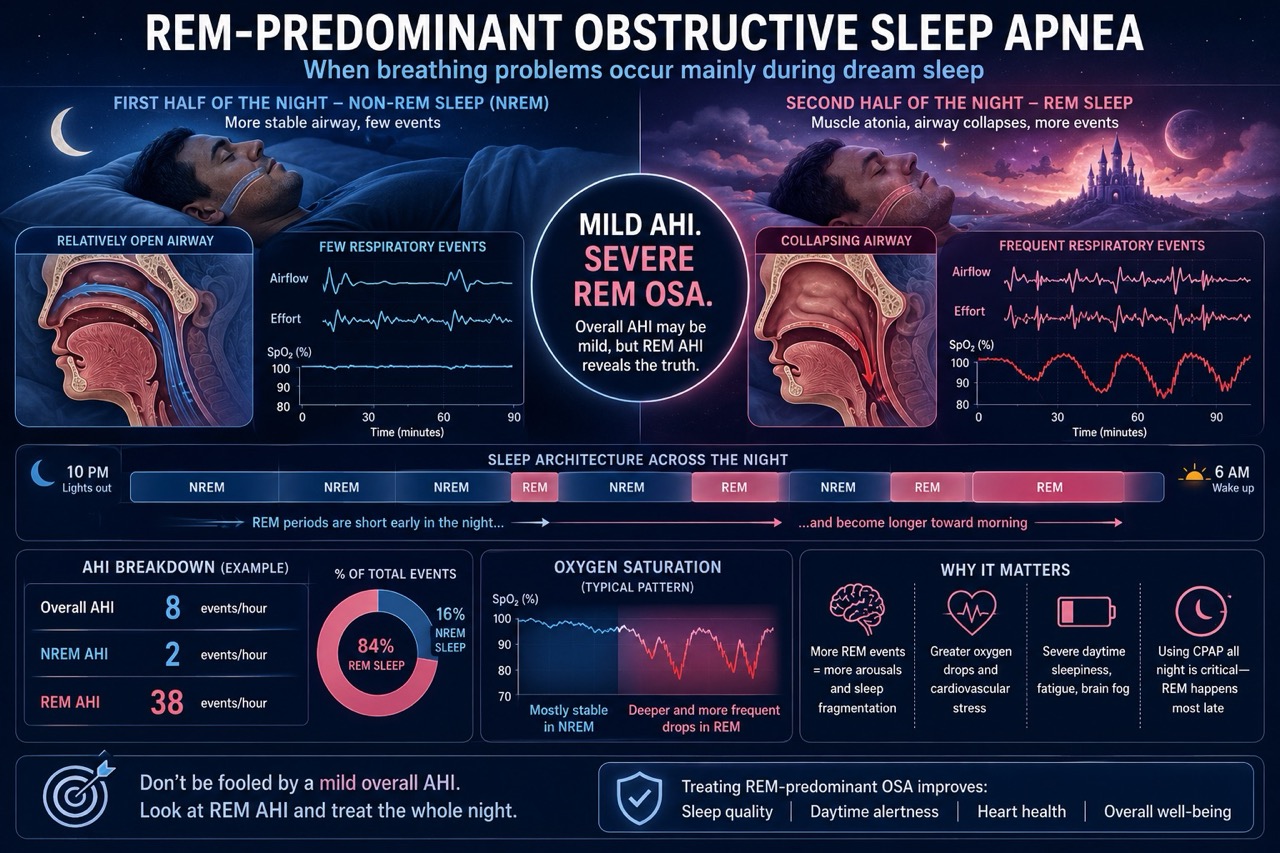
Not all sleep apnea occurs evenly throughout the night.
Many patients experience most of their respiratory events during rapid eye movement (REM) sleep, a stage commonly associated with vivid dreaming, emotional processing, and memory consolidation.
In some individuals, breathing may be relatively stable during non-REM sleep yet deteriorate dramatically during REM sleep.
This pattern is known as REM-predominant obstructive sleep apnea (REM-OSA).
Because traditional severity classifications rely heavily on overall AHI, REM-related disease may be underestimated despite producing significant symptoms and physiological stress.
(more…)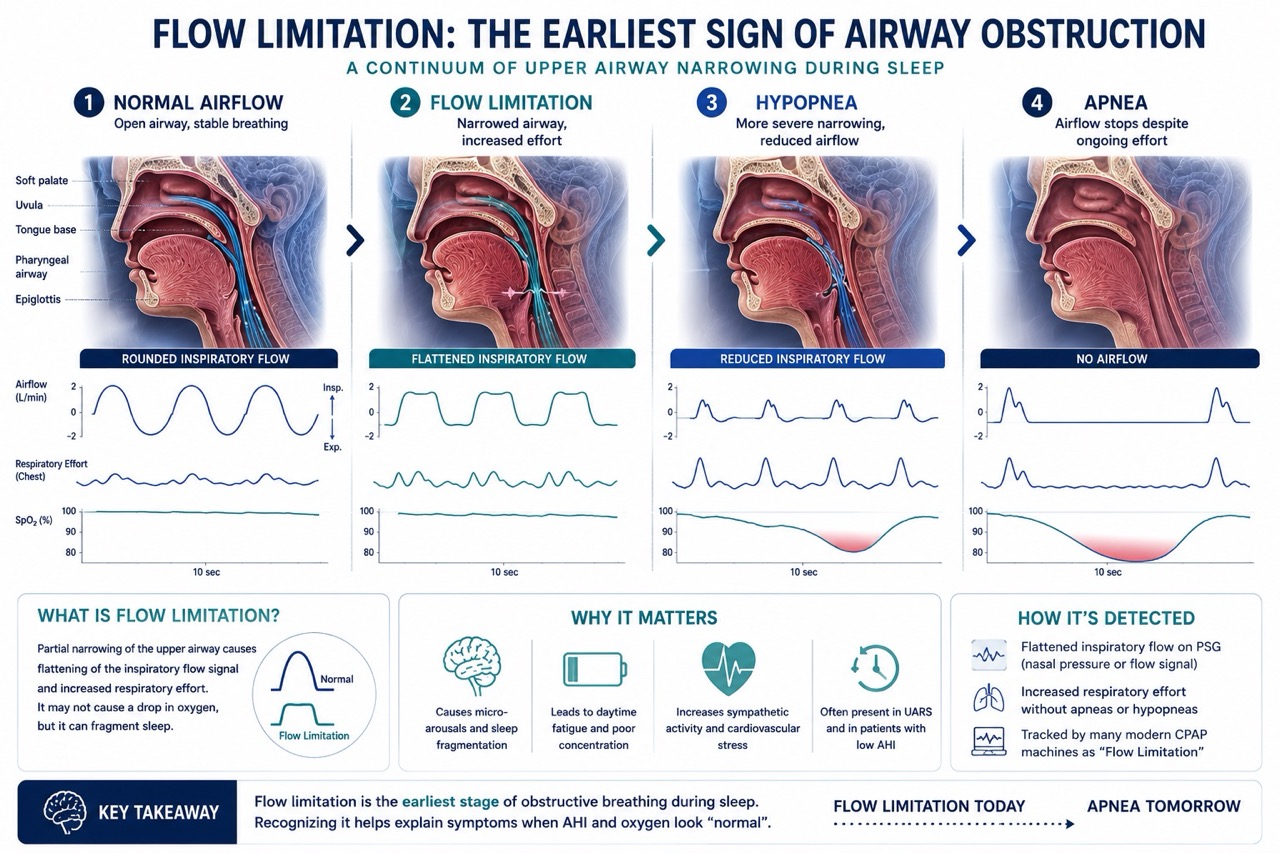
Most patients diagnosed with sleep apnea eventually learn about terms such as AHI, oxygen saturation, and CPAP pressure settings.
Yet one of the most important respiratory signals in modern sleep medicine often goes completely unmentioned: flow limitation.
Flow limitation can occur long before a complete apnea develops. In many patients, it contributes significantly to sleep fragmentation, daytime fatigue, and reduced sleep quality even when oxygen levels remain relatively normal.
(more…)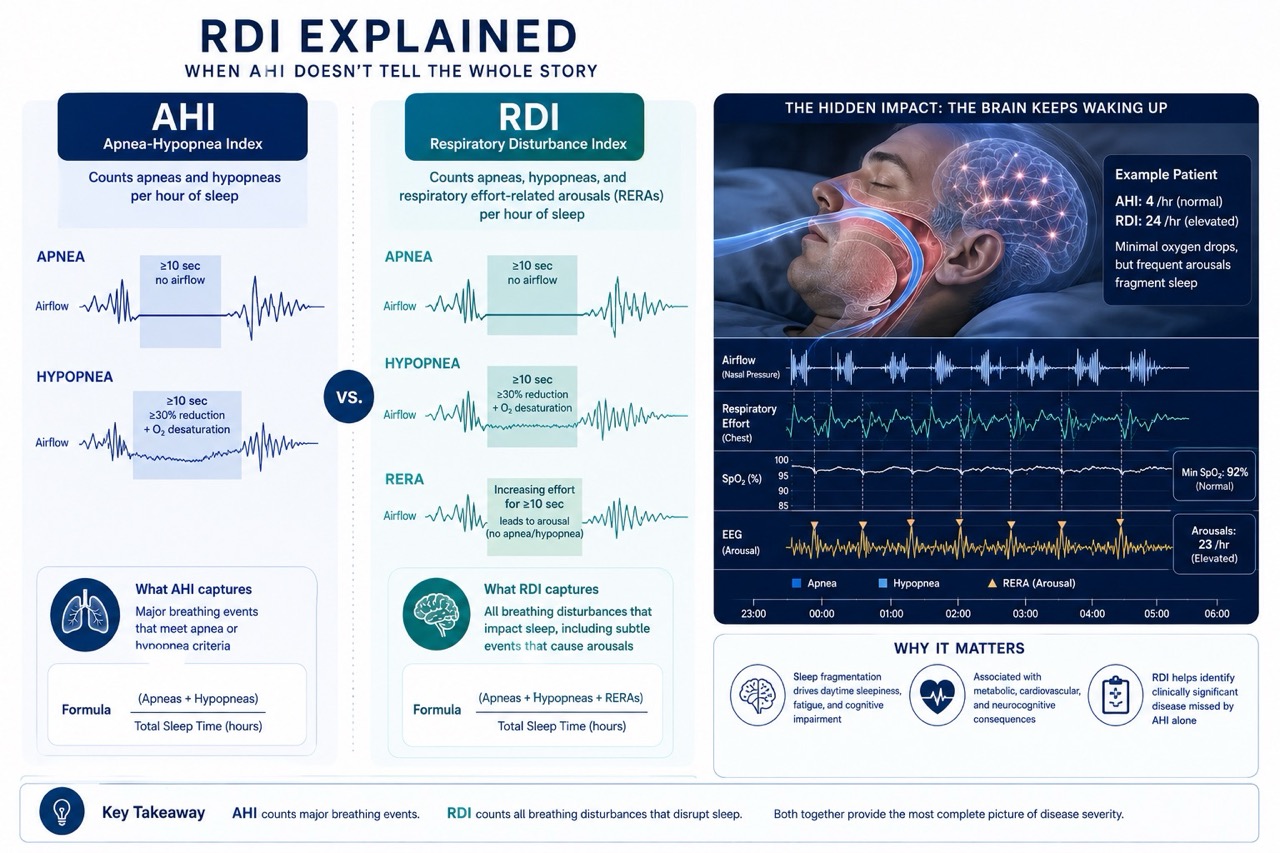
Most patients undergoing a sleep study become familiar with one number above all others: the Apnea-Hypopnea Index (AHI).
AHI serves as the foundation of sleep apnea diagnosis and treatment decisions throughout much of the world. However, many sleep reports contain another metric that often receives far less attention: the Respiratory Disturbance Index (RDI).
In some cases, patients may have a normal or only mildly elevated AHI but a substantially higher RDI. These individuals often experience significant symptoms despite appearing to have relatively mild sleep-disordered breathing according to traditional AHI criteria.
(more…)
For most patients diagnosed with obstructive sleep apnea (OSA), the first number they encounter is the Apnea-Hypopnea Index (AHI).
AHI has served as the cornerstone of sleep apnea diagnosis for decades and remains the primary metric used to classify disease severity.
However, advances in sleep medicine have revealed important limitations in relying solely on respiratory event counts. Researchers increasingly recognize that the physiological consequences of sleep apnea may depend as much on oxygen deprivation as on the number of breathing disturbances themselves.
(more…)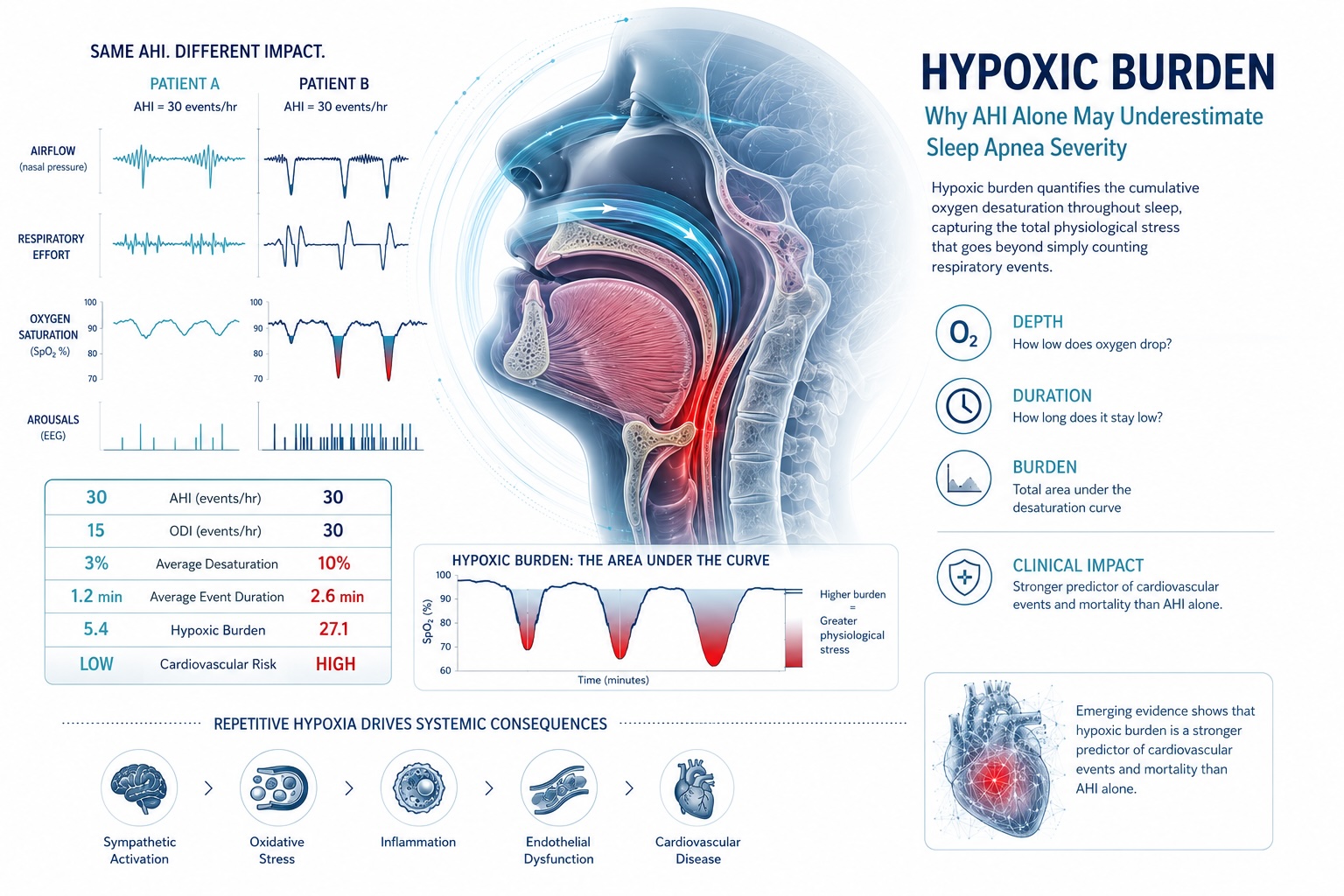
For decades, obstructive sleep apnea (OSA) severity has been defined primarily by the Apnea-Hypopnea Index (AHI), a measure that counts the average number of respiratory events per hour of sleep.
Although AHI remains the foundation of diagnosis and treatment decisions, researchers increasingly recognize that event frequency alone may not accurately reflect the true physiological consequences of sleep-disordered breathing.
A patient with frequent but mild respiratory events may have the same AHI as another patient experiencing prolonged airway obstruction and profound oxygen deprivation. Yet their cardiovascular risk profiles may be dramatically different.
(more…)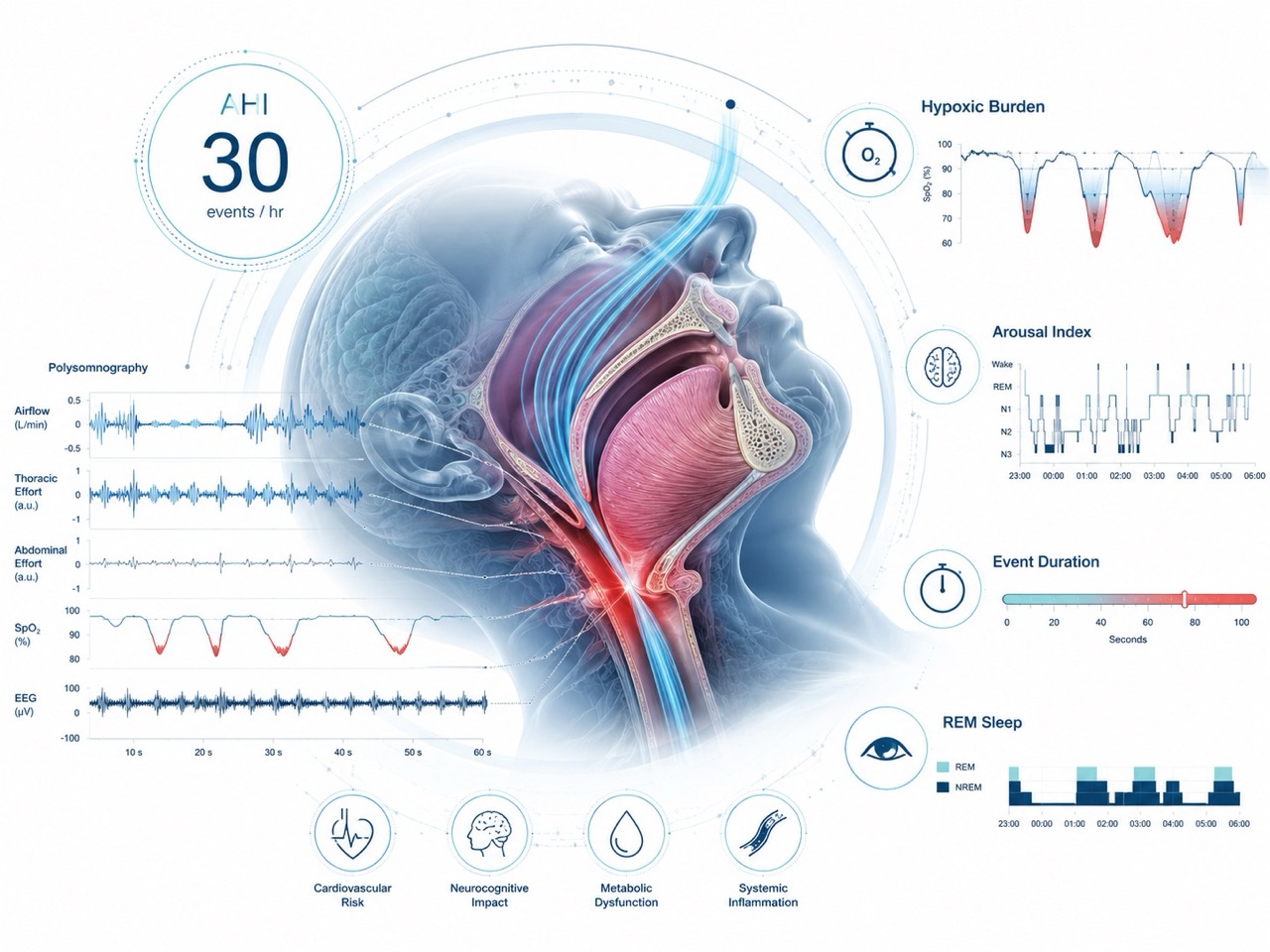
For decades, the Apnea-Hypopnea Index (AHI) has served as the primary metric for diagnosing and classifying obstructive sleep apnea (OSA). Patients are commonly categorized as having mild, moderate, or severe disease based almost entirely on the number of respiratory events recorded per hour of sleep.
While AHI remains a valuable diagnostic tool, growing evidence suggests that it provides only a partial picture of disease severity. Two patients with identical AHIs may experience dramatically different physiological consequences, symptom burdens, and long-term health outcomes.
(more…)