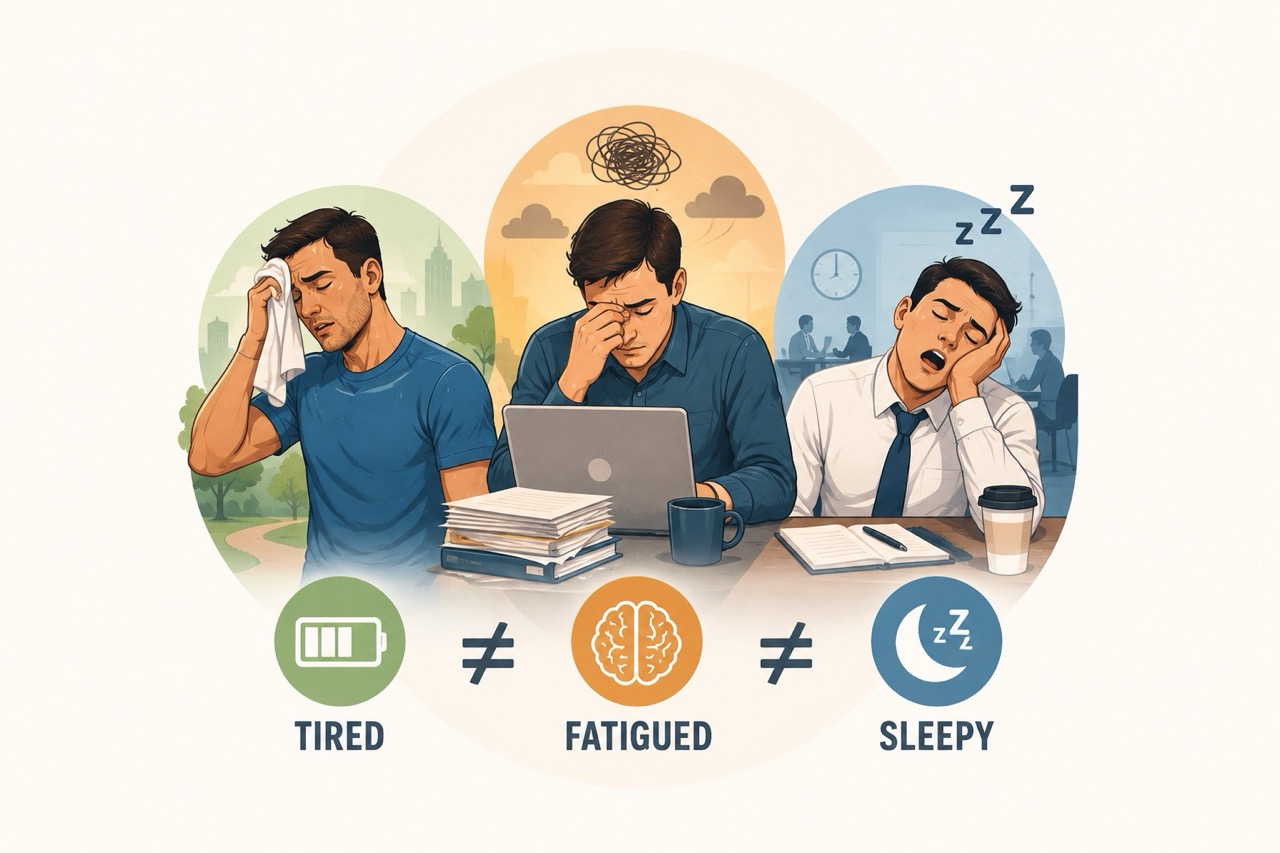
Tired, Fatigued, or Sleepy? Understanding the Difference
“I’m tired all the time.”
It’s one of the most common complaints heard by doctors.
The problem is that “tired” can mean many different things.
You might be physically exhausted after a long day. You might feel mentally drained after hours of work. Or you might be fighting a strong urge to fall asleep while sitting on the couch.
Although these feelings often overlap, they are not the same.
Understanding the difference between tiredness, fatigue, and sleepiness can help identify whether you’re simply overworked—or whether an underlying sleep disorder such as sleep apnea may be affecting your health.
What Does “Tired” Actually Mean?
Tiredness is a general feeling of reduced energy.
Most people experience it after:
- Physical activity
- Emotional stress
- Long workdays
- Poor sleep
- Illness
Tiredness is usually temporary.
After rest, relaxation, or a good night’s sleep, energy levels often improve.
Think of tiredness as your body’s way of saying:
“Slow down for a while.”
What Is Fatigue?
Fatigue goes beyond ordinary tiredness.
People experiencing fatigue often describe:
- Lack of motivation
- Low energy
- Mental fog
- Reduced stamina
- Difficulty concentrating
Unlike ordinary tiredness, fatigue may persist even after sleep.
Common causes include:
- Chronic stress
- Depression
- Anxiety
- Chronic illness
- Autoimmune disorders
- Nutritional deficiencies
- Certain medications
Fatigue can feel like running on an empty battery, even after adequate rest.
What Is Sleepiness?
Sleepiness is different from both tiredness and fatigue.
Sleepiness means you have an actual tendency to fall asleep.
You may notice yourself:
- Nodding off while reading
- Falling asleep during movies
- Drifting off during meetings
- Dozing in a car
- Taking frequent naps
Sleepiness is not simply low energy.
It is your brain actively trying to obtain sleep.
This distinction is so important that sleep medicine uses dedicated tools, such as the Epworth Sleepiness Scale, specifically to measure daytime sleepiness.
A Quick Comparison
Tiredness
- Low energy
- Improves with rest
- Usually temporary
- Common after exertion
Fatigue
- Persistent exhaustion
- Often affects motivation
- May not improve with sleep
- Can indicate medical conditions
Sleepiness
- Strong urge to sleep
- Dozing in passive situations
- Often linked to poor sleep quality
- Common in sleep disorders
Why Sleep Specialists Care About Sleepiness
If you tell a sleep doctor:
“I’m tired.”
They will often ask:
“Could you fall asleep if you sat quietly for 20 minutes?”
Why?
Because excessive sleepiness often points toward sleep disruption.
Conditions such as obstructive sleep apnea repeatedly interrupt normal sleep throughout the night.
Even if you spend eight hours in bed, your brain may never receive enough restorative sleep.
The result is daytime sleepiness.
The Hidden Danger of Sleepiness
Many people underestimate how sleepy they are.
Over time, the brain adapts.
People begin to think:
- Falling asleep during TV is normal
- Napping daily is normal
- Struggling through afternoons is normal
Often it isn’t.
Excessive daytime sleepiness has been associated with:
- Motor vehicle accidents
- Workplace injuries
- Reduced productivity
- Memory problems
- Poor concentration
In severe cases, people may fall asleep without intending to.
Could Sleep Apnea Be the Cause?
Sleep apnea should be considered if sleepiness is accompanied by:
- Loud snoring
- Witnessed breathing pauses
- Morning headaches
- Dry mouth upon waking
- Frequent nighttime awakenings
- High blood pressure
- Unrefreshing sleep
These symptoms often occur together.
A Simple Self-Test
Imagine yourself in these situations:
- Sitting and reading
- Watching television
- Riding as a passenger in a car
- Sitting quietly after lunch
Would you remain fully awake?
Or would you struggle to stay alert?
If you could easily fall asleep in several of these situations, your symptoms may be more than ordinary tiredness.
When Should You Seek Help?
Consider discussing your symptoms with a healthcare professional if:
- Sleepiness occurs regularly
- You unintentionally fall asleep during the day
- Your partner reports loud snoring
- You wake feeling unrefreshed
- Symptoms interfere with work or daily life
Questionnaires such as the Epworth Sleepiness Scale and STOP-BANG can provide useful starting points for assessing risk.
The Bottom Line
Tiredness, fatigue, and sleepiness are often used interchangeably, but they describe very different experiences.
Tiredness usually improves with rest. Fatigue often reflects a broader physical or emotional burden. Sleepiness, however, is the brain’s drive to sleep—and it can be an important warning sign that something is disrupting your sleep every night.
If you find yourself frequently fighting the urge to fall asleep during ordinary daytime activities, it may be time to look beyond “being tired” and explore what is really happening during your sleep.