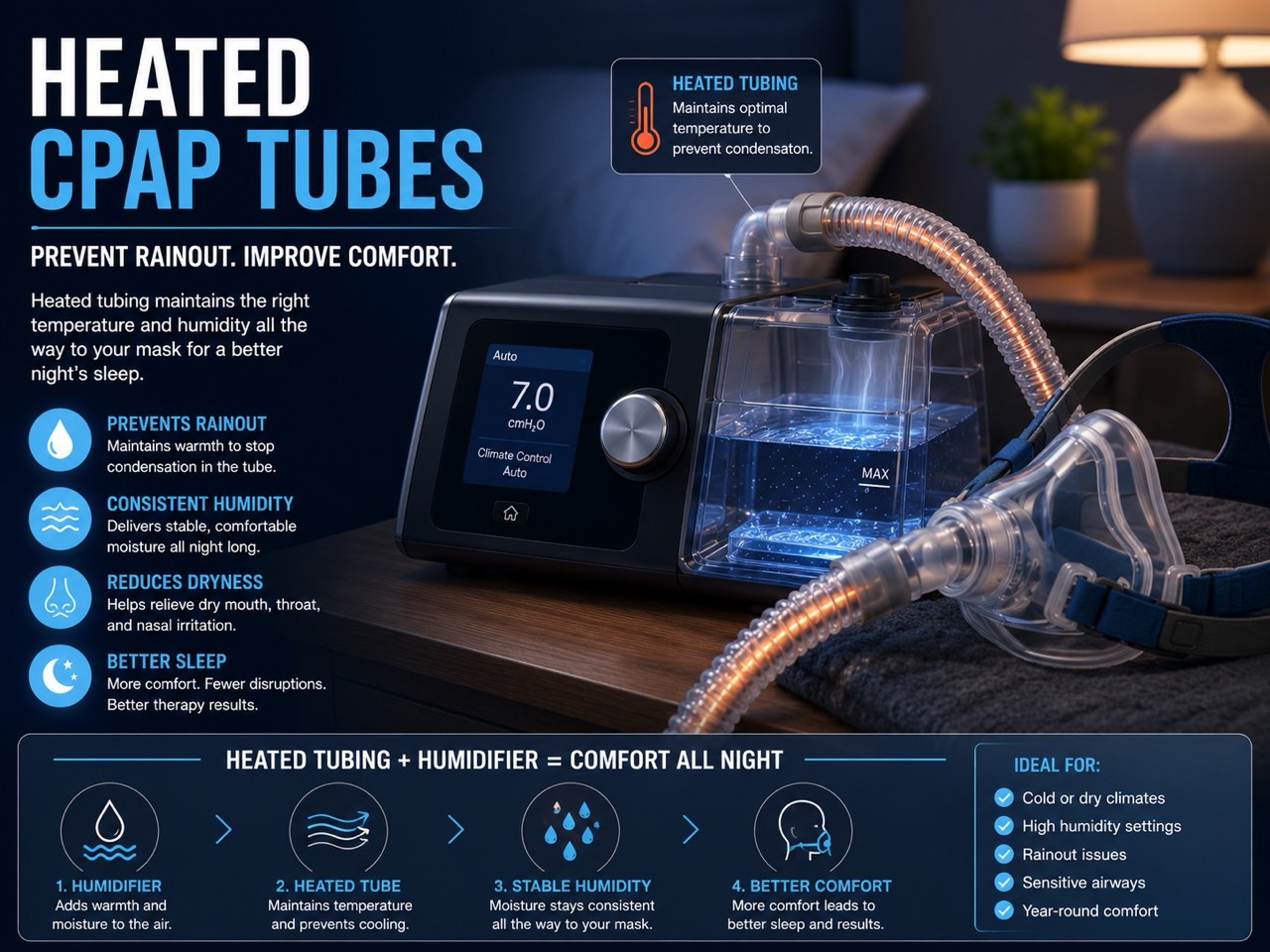
Heated CPAP tubes: preventing rainout and improving therapy comfort
Modern PAP therapy has become increasingly comfortable thanks to innovations designed to improve airflow quality and reduce common side effects. One of the most useful advancements is the heated CPAP tube, also known as a heated hose.
While heated humidifiers add moisture to therapy air, heated tubing helps maintain that moisture all the way from the machine to the mask. Together, these technologies reduce dryness, improve comfort, and help prevent one of the most common PAP frustrations: rainout.
For many users, heated tubing transforms PAP therapy from merely tolerable to genuinely comfortable.
What is a heated CPAP tube?
A heated CPAP tube is a specialized hose containing an integrated heating element.
Unlike standard tubing, heated hoses actively warm the air as it travels from the PAP machine to the mask.
This helps maintain:
- Air temperature
- Humidity levels
- User comfort
- Consistent therapy conditions
Most modern premium PAP systems support heated tubing as either a standard or optional accessory.
Why was heated tubing developed?
Humidification improves comfort by adding moisture to therapy air.
However, humidified air can cool while traveling through the hose.
When warm moist air cools:
- Water condenses
- Droplets form inside the tube
- Gurgling sounds may occur
- Water may reach the mask
This phenomenon is known as rainout.
Heated tubing was developed specifically to prevent this problem.
What is rainout?
Rainout occurs when water vapor condenses inside the PAP tubing.
Common symptoms include:
- Water droplets inside the hose
- Gurgling noises
- Moisture reaching the mask
- Sleep disruption
- Reduced comfort
Although harmless, rainout can be extremely annoying.
How heated tubing prevents rainout
The integrated heating element maintains a stable temperature throughout the hose.
This prevents humidified air from cooling excessively.
Benefits include:
- Less condensation
- Stable humidity
- Improved comfort
- Reduced interruptions
The result is a more consistent therapy experience throughout the night.
Benefits of heated CPAP tubing
Reduced condensation
The primary benefit of heated tubing.
More consistent humidity
Moisture levels remain stable from machine to mask.
Increased comfort
Warm airflow often feels more natural.
Less dryness
Improved humidity delivery may reduce:
- Dry mouth
- Dry throat
- Nasal irritation
Quieter operation
Eliminates many rainout-related noises.
Heated tubing versus standard tubing
Standard tubing
Advantages:
- Lower cost
- Simpler design
- Lightweight
Limitations:
- More susceptible to rainout
- Greater temperature fluctuations
Heated tubing
Advantages:
- Better humidity control
- Reduced condensation
- Improved comfort
- More stable airflow conditions
Limitations:
- Slightly higher cost
- Requires compatible equipment
For many users, the comfort improvements justify the upgrade.
Who benefits most from heated tubing?
Heated hoses are especially useful for:
Users in cold climates
Lower room temperatures increase condensation risk.
Users who experience rainout
The most obvious candidates.
High humidity users
Higher humidity settings increase condensation potential.
Sensitive airways
Warm, humidified air may improve comfort.
Long-term PAP users
Many experienced users eventually adopt heated tubing.
Heated tubing and heated humidifiers
These technologies work best together.
Heated humidifier
Adds moisture.
Heated tube
Maintains moisture.
Think of the humidifier as creating humidity and the heated tube as protecting it.
Together they provide a more comfortable therapy experience.
Automatic climate control
Many modern PAP systems include automatic climate management.
These systems adjust:
- Tube temperature
- Humidity levels
- Environmental conditions
The goal is to provide optimal comfort while minimizing condensation.
Users can often choose between:
- Automatic mode
- Manual adjustment
Choosing the right temperature
There is no universal setting.
Preferences vary based on:
- Climate
- Season
- Bedroom temperature
- Personal comfort
Many users prefer moderate warmth rather than maximum temperature.
Experimentation may be necessary.
Travel considerations
Heated tubing can be valuable during travel, particularly in:
- Cold hotel rooms
- Air-conditioned environments
- Mountain locations
- Winter travel
However, some travel PAP systems do not support heated hoses.
Travelers should verify compatibility before purchasing accessories.
Cleaning and maintenance
Proper maintenance is important.
Recommended practices include:
- Regular cleaning
- Visual inspection
- Avoiding sharp bends
- Following manufacturer instructions
Because heated tubes contain electrical components, care should be taken during cleaning and storage.
Are heated tubes necessary?
Not always.
Many PAP users do well with standard tubing.
However, heated tubing may be highly beneficial if you experience:
- Rainout
- Dryness
- Temperature sensitivity
- Cold airflow discomfort
For these users, heated hoses often provide significant improvements.
Common misconceptions
“Heated tubes make air hot.”
Not usually.
Most systems provide gentle warming designed for comfort rather than heat.
“They are only for winter.”
While especially useful in colder environments, heated tubing can improve humidity stability year-round.
“They replace humidifiers.”
No.
Heated tubes complement humidifiers rather than replacing them.
Heated CPAP tubes are one of the most effective comfort accessories available for PAP therapy. By maintaining stable air temperature and humidity throughout the hose, they help prevent rainout, reduce dryness, and improve overall treatment comfort. When combined with a heated humidifier, a heated tube can significantly enhance the therapy experience and help users achieve more consistent, comfortable sleep apnea treatment.