Category: Devices

The Devices category provides comprehensive information about medical and consumer technologies used in the diagnosis, treatment, monitoring, and management of sleep-related breathing disorders and other sleep conditions. It includes diagnostic equipment such as sleep study systems and pulse oximeters, therapeutic devices including CPAP, APAP, BiPAP, and ASV machines, masks and accessories, oral appliances, positional therapy solutions, oxygen therapy equipment, implantable treatments, and sleep monitoring wearables. The category is designed to help patients, caregivers, healthcare professionals, and researchers understand available technologies, compare solutions, access educational resources, and make informed decisions regarding sleep health and therapy adherence.

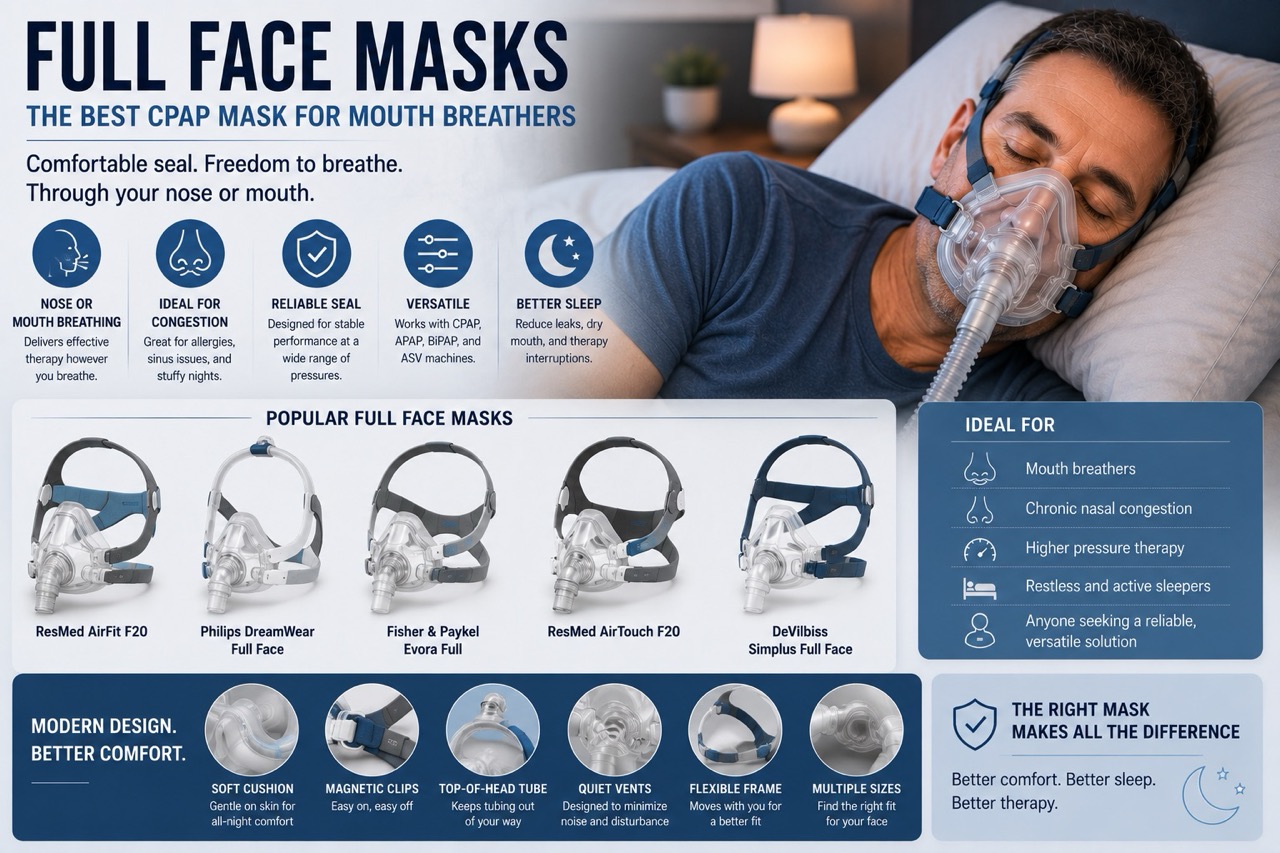
Full face masks: the best CPAP mask for mouth breathers


For many sleep apnea patients, PAP therapy becomes much easier once they find the right mask. While nasal masks and nasal pillow masks are excellent options for many users, they rely heavily on the ability to breathe comfortably through the nose.

For people who frequently breathe through their mouths during sleep, suffer from chronic nasal congestion, or require higher therapy pressures, a full face mask may be the most effective solution.

(more…)

Nasal pillow masks: minimal contact, maximum freedom


For many people starting PAP therapy, one of the biggest concerns is the mask itself. Traditional masks can appear bulky, restrictive, or intimidating, leading some patients to worry about comfort and long-term use.

Nasal pillow masks were developed to solve many of these concerns. Instead of covering the nose or the entire face, these ultra-minimal interfaces use small soft cushions that rest directly at the nostrils, delivering therapy with remarkably little facial contact.

(more…)

Nasal masks: the most popular CPAP mask for sleep apnea therapy


When people think of CPAP therapy, the image that often comes to mind is a nasal mask. For decades, nasal masks have been one of the most widely prescribed and most successful interfaces used in positive airway pressure therapy.

Offering an effective balance between comfort, stability, and performance, nasal masks are often recommended as a first choice for new CPAP users. While they may not be ideal for everyone, they remain one of the most versatile and effective options available for treating sleep apnea.

(more…)

CPAP masks: choosing the right interface for comfortable and effective therapy


Even the most advanced CPAP, APAP, BiPAP, or ASV machine can only be effective if the user wears it consistently. While pressure settings and machine technology are important, many sleep specialists agree that mask comfort is often the single most important factor determining long-term treatment success.

A properly fitted mask can mean the difference between restful sleep and abandoning therapy altogether. Fortunately, modern sleep medicine offers a wide range of mask designs, sizes, and configurations to accommodate different sleeping styles, facial structures, and personal preferences.

(more…)

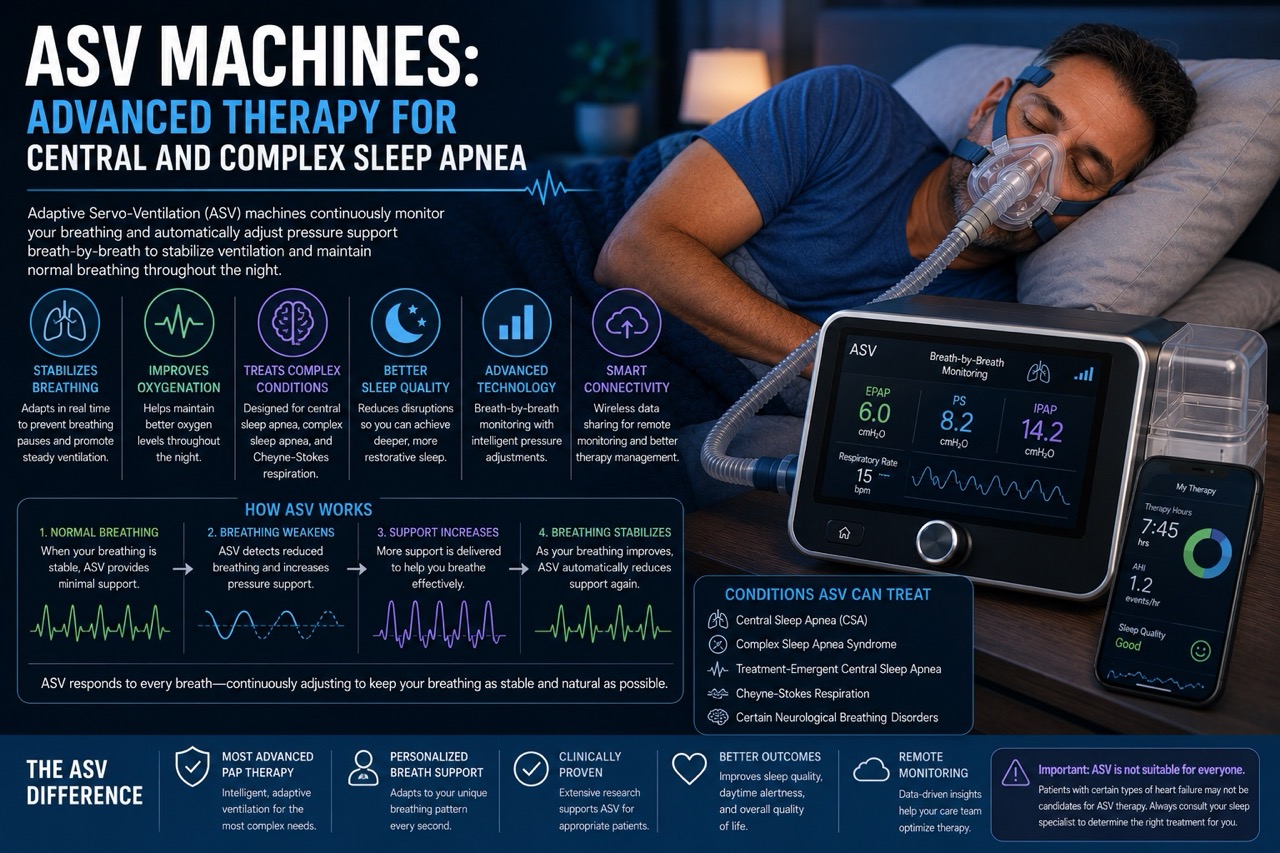
ASV machines: advanced therapy for central and complex sleep apnea


While CPAP, APAP, and BiPAP therapies successfully treat millions of people with obstructive sleep apnea, some patients experience breathing disorders that require a more sophisticated approach. For these individuals, Adaptive Servo-Ventilation (ASV) may provide the most advanced form of non-invasive sleep breathing support available today.

ASV technology continuously monitors every breath and automatically adjusts pressure support in real time. Unlike traditional PAP therapies that primarily prevent airway collapse, ASV actively responds to unstable breathing patterns and helps maintain normal ventilation throughout the night.

(more…)

BiPAP machines: when CPAP and APAP are not enough


For many people with obstructive sleep apnea, CPAP and APAP therapy provide excellent results. However, some patients require higher pressures, have difficulty exhaling against continuous pressure, or suffer from more complex breathing disorders. In these situations, a BiPAP machine may offer a more comfortable and effective solution.

BiPAP, also known as BPAP (Bilevel Positive Airway Pressure), delivers two different pressure levels: a higher pressure when inhaling and a lower pressure when exhaling. This distinction can significantly improve comfort and breathing support for certain patients.

(more…)

APAP machines: intelligent sleep apnea therapy that adjusts to your breathing


Positive Airway Pressure therapy has evolved significantly over the past few decades. While traditional CPAP machines remain highly effective, many modern sleep apnea patients are now prescribed APAP devices that automatically adjust therapy pressure throughout the night.

APAP, or Automatic Positive Airway Pressure, uses advanced algorithms and sensors to continuously monitor breathing patterns and respond to changing airway conditions. Instead of delivering a single fixed pressure, an APAP machine automatically increases or decreases pressure when needed.

(more…)

CPAP machines: the most effective treatment for obstructive sleep apnea


For millions of people living with obstructive sleep apnea (OSA), Continuous Positive Airway Pressure (CPAP) therapy remains the gold standard treatment. Decades of clinical research have demonstrated that CPAP therapy can dramatically improve sleep quality, reduce daytime fatigue, lower cardiovascular risk, and improve overall quality of life when used consistently.

Although the idea of sleeping with a mask and airflow device may seem intimidating at first, modern CPAP machines are quieter, smaller, and more comfortable than ever before. For many patients, CPAP therapy can be life-changing.

(more…)

Cardiorespiratory monitoring systems: understanding breathing and heart activity during sleep


Breathing and heart function are closely connected during sleep. When breathing becomes disrupted, oxygen levels can fall, heart rate may fluctuate, and the body can experience significant physiological stress. For this reason, many sleep disorders are evaluated using cardiorespiratory monitoring systems that simultaneously track respiratory and cardiovascular activity throughout the night.

These devices play an important role in diagnosing sleep apnea, monitoring treatment effectiveness, assessing oxygenation, and identifying sleep-related breathing disorders that may affect overall health and quality of life.

(more…)

Actigraphy: measuring sleep patterns over days and weeks


Most sleep studies focus on what happens during a single night. Actigraphy takes a different approach. Instead of examining sleep in a laboratory for a few hours, actigraphy monitors sleep and activity patterns continuously over days, weeks, or even months.

By tracking movement throughout daily life, actigraphy helps sleep specialists understand how a person sleeps in their natural environment. It is particularly useful for evaluating insomnia, circadian rhythm disorders, irregular sleep schedules, and long-term sleep behavior.

(more…)