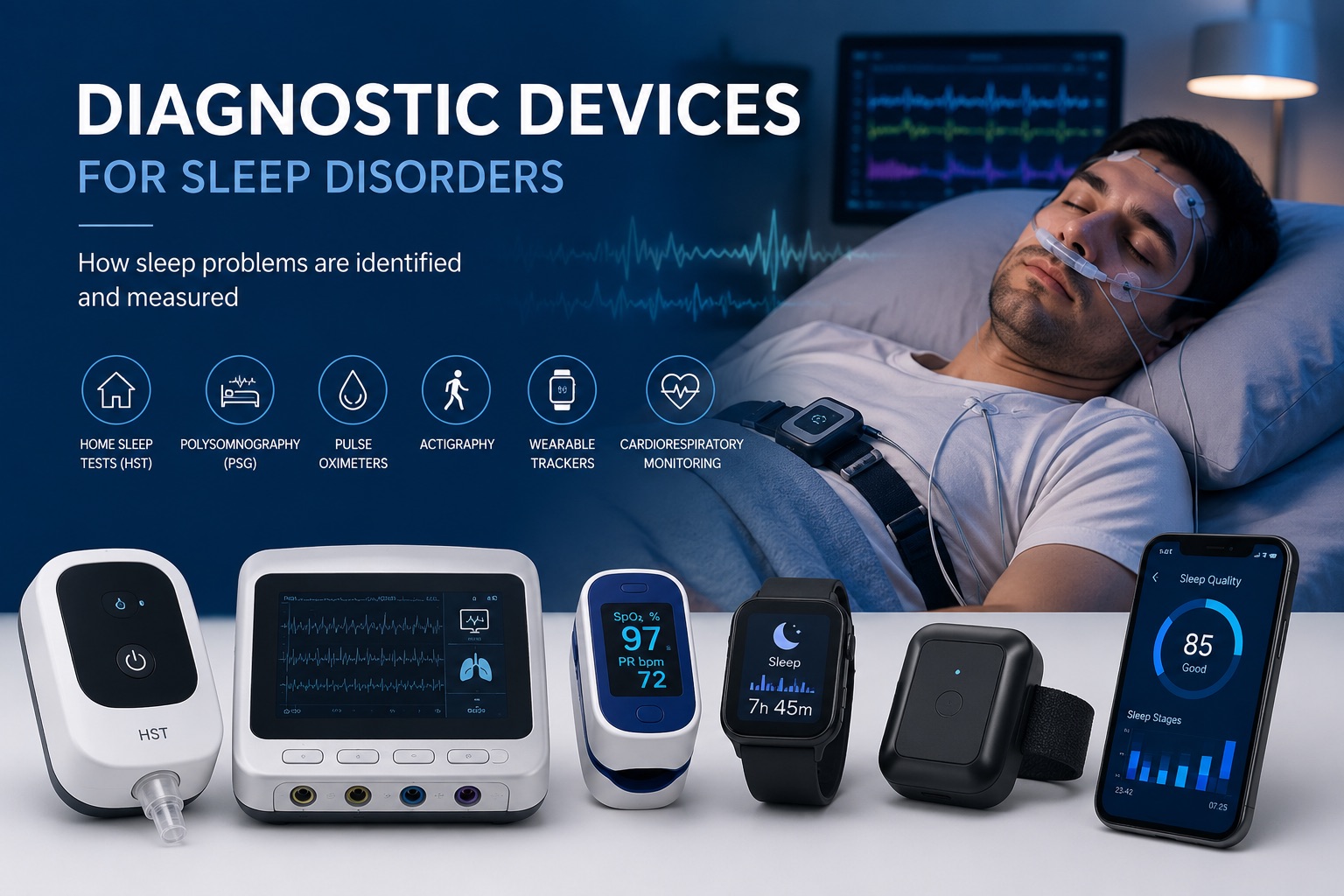
Diagnostic devices for sleep disorders: how sleep problems are identified and measured
Sleep disorders cannot usually be diagnosed based solely on symptoms. While snoring, daytime fatigue, morning headaches, poor concentration, and restless sleep may indicate an underlying condition, healthcare professionals often rely on specialized diagnostic devices to understand what happens while a person is asleep.
Modern diagnostic technologies allow clinicians to monitor breathing patterns, oxygen levels, heart activity, body movements, sleep stages, and other physiological signals that may reveal conditions such as obstructive sleep apnea (OSA), central sleep apnea (CSA), insomnia, restless legs syndrome, periodic limb movement disorder, narcolepsy, and other sleep-related disorders.
Why diagnosis matters
Many sleep disorders share similar symptoms. Excessive daytime sleepiness, fatigue, poor memory, mood changes, and reduced productivity can result from a wide range of underlying causes.
Without proper diagnosis, treatment may be ineffective or even inappropriate.
Diagnostic testing helps determine:
- Whether a sleep disorder exists
- Which type of disorder is present
- How severe the condition is
- Which treatment options may be most effective
- Whether treatment is working over time
Home Sleep Tests (HST)
Home Sleep Tests have become increasingly popular due to their convenience and affordability.
These portable devices allow patients to undergo sleep monitoring in their own homes rather than spending a night in a sleep laboratory.
Most HST systems monitor:
- Airflow
- Breathing effort
- Blood oxygen levels
- Heart rate
- Snoring
- Body position
Home sleep tests are commonly used to evaluate suspected obstructive sleep apnea in adults with typical symptoms and relatively straightforward medical histories.
Advantages
- Convenient home-based testing
- Lower cost than laboratory studies
- Faster access to diagnosis
- More natural sleeping environment
Limitations
- Fewer physiological measurements
- Less effective for complex sleep disorders
- May miss certain neurological sleep conditions
- Not suitable for every patient
Polysomnography (PSG)
Polysomnography is considered the gold standard of sleep diagnostics.
Performed in a specialized sleep laboratory, PSG provides comprehensive monitoring throughout the night.
A typical polysomnography study records:
- Brain activity (EEG)
- Eye movements
- Muscle activity
- Heart rhythm (ECG)
- Oxygen saturation
- Airflow
- Respiratory effort
- Body position
- Limb movements
Because it measures so many physiological signals simultaneously, PSG can diagnose a wide range of sleep disorders and provide highly detailed information about sleep architecture and breathing abnormalities.
Advantages
- Highest diagnostic accuracy
- Comprehensive physiological monitoring
- Suitable for complex cases
- Can diagnose multiple disorders simultaneously
Limitations
- More expensive
- Requires overnight laboratory attendance
- May involve waiting lists
- Less convenient than home testing
Pulse Oximeters
Pulse oximeters measure blood oxygen saturation and heart rate.
These devices are often used as screening tools when sleep-disordered breathing is suspected.
During sleep apnea events, oxygen levels may repeatedly drop as breathing becomes restricted or stops entirely.
Although pulse oximetry alone cannot diagnose sleep apnea, abnormal overnight oxygen patterns may indicate the need for more comprehensive testing.
Actigraphy Devices
Actigraphy uses motion sensors to estimate sleep and wake patterns over extended periods.
These devices are typically worn on the wrist and resemble fitness trackers or smart watches.
Actigraphy is particularly useful for evaluating:
- Insomnia
- Circadian rhythm disorders
- Sleep scheduling problems
- Long-term sleep behavior
Because actigraphy measures movement rather than physiological sleep stages, it is generally considered a complementary tool rather than a definitive diagnostic test.
Sleep Monitoring Wearables
Consumer sleep technology has expanded rapidly in recent years.
Modern wearables may track:
- Heart rate
- Heart rate variability
- Oxygen levels
- Skin temperature
- Movement
- Estimated sleep stages
Examples include smart watches, smart rings, and dedicated sleep trackers.
These devices can provide useful insights into sleep habits and trends, but their accuracy varies considerably between manufacturers and models.
Most wearable devices are intended for wellness and self-monitoring rather than medical diagnosis.
Cardiorespiratory Monitoring Systems
Cardiorespiratory devices focus on breathing and cardiovascular activity during sleep.
They may be used in:
- Home sleep testing systems
- Clinical monitoring programs
- Research environments
- Follow-up assessments
Measurements may include:
- Respiratory rate
- Airflow
- Heart rate
- Oxygen saturation
- Breathing effort
These systems are particularly valuable when evaluating suspected sleep apnea and other respiratory sleep disorders.
Medical-grade versus consumer devices
Not all sleep monitoring technologies are created equal.
Medical-grade devices are designed, validated, and regulated for clinical use. Their data may be used by healthcare professionals to support diagnosis and treatment decisions.
Consumer devices are generally designed for lifestyle tracking and wellness purposes. While many offer impressive technology, they typically do not undergo the same level of clinical validation as regulated medical equipment.
Users should be cautious about relying solely on consumer devices when symptoms suggest a significant sleep disorder.
Choosing the right diagnostic solution
The most appropriate diagnostic device depends on several factors:
- Symptoms and medical history
- Age and overall health
- Suspected sleep disorder
- Availability of sleep services
- Physician recommendations
For some individuals, a simple home sleep test may provide all the information needed. Others may require comprehensive laboratory testing and specialist evaluation.
Accurate diagnosis is the foundation of effective sleep disorder treatment. Advances in sleep medicine have made diagnostic testing more accessible than ever, ranging from home sleep tests and wearable monitoring devices to sophisticated laboratory-based polysomnography systems. Understanding the strengths and limitations of each technology can help patients make informed decisions and work closely with healthcare professionals to identify the underlying causes of poor sleep and develop an appropriate treatment plan.