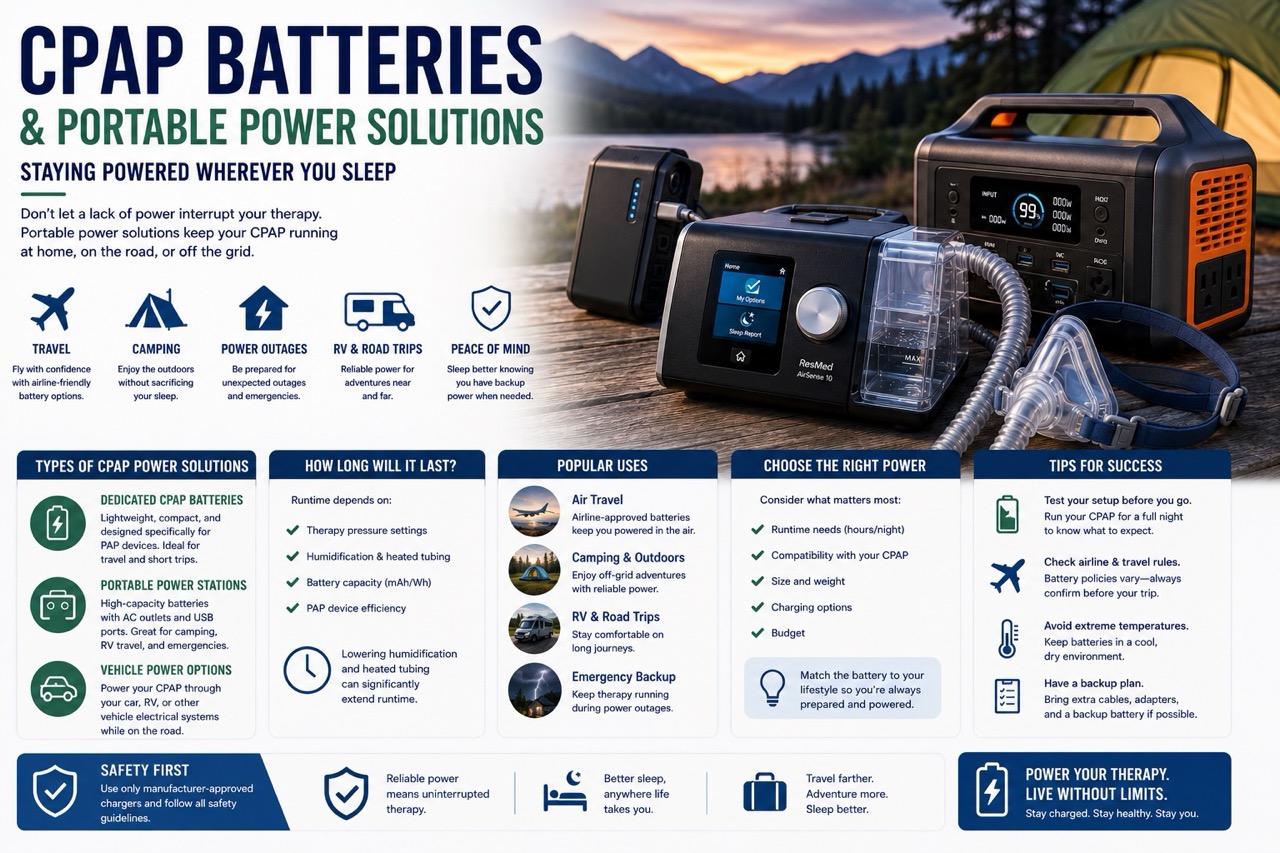
CPAP batteries and portable power solutions: staying powered wherever you sleep
For most sleep apnea patients, PAP therapy becomes a nightly necessity. While using a CPAP machine at home is usually straightforward, maintaining therapy becomes more challenging when electricity is unavailable.
Whether traveling, camping, flying, experiencing a power outage, or spending time off-grid, reliable power becomes an essential part of successful treatment.
Fortunately, modern battery systems and portable power solutions allow PAP users to continue therapy virtually anywhere. From compact airline-approved batteries to high-capacity power stations capable of supporting multiple nights of use, today’s options offer more flexibility than ever before.
Understanding how CPAP batteries work can help users stay prepared and avoid interruptions in therapy.
Why CPAP batteries matter
Most PAP devices depend on electrical power.
Without power, therapy may stop completely.
Situations where battery power becomes important include:
- Air travel
- Camping
- RV travel
- Remote locations
- Emergency preparedness
- Natural disasters
- Power outages
A backup power solution can provide peace of mind and protect therapy continuity.
What is a CPAP battery?
A CPAP battery is a portable power source designed to operate PAP equipment away from standard electrical outlets.
Battery systems vary widely in:
- Capacity
- Weight
- Size
- Runtime
- Charging options
Some are specifically designed for PAP therapy, while others are general-purpose portable power stations.
Types of CPAP power solutions
Dedicated CPAP batteries
Purpose-built for PAP machines.
Advantages:
- Compact size
- Travel-friendly design
- Optimized compatibility
Common use cases:
- Flights
- Business travel
- Weekend trips
Portable power stations
Larger battery systems capable of powering multiple devices.
Advantages:
- Longer runtime
- Multiple charging ports
- Greater versatility
Common use cases:
- Camping
- RV travel
- Emergency backup
Vehicle power systems
Some PAP users operate equipment through:
- Car batteries
- RV electrical systems
- Vehicle power adapters
Useful for road travel and outdoor adventures.
How long will a CPAP battery last?
Battery runtime depends on several factors.
Therapy pressure
Higher pressure settings generally consume more power.
Humidification
Heated humidifiers significantly increase power usage.
Heated tubing
Heated hoses also increase energy consumption.
Battery capacity
Larger batteries naturally provide longer runtimes.
Machine efficiency
Different PAP devices consume power differently.
A battery that lasts several nights without humidification may provide only one night with full climate control enabled.
Maximizing battery runtime
Many users extend battery life by:
Disabling humidification
One of the most effective strategies.
Disabling heated tubing
Can substantially reduce energy use.
Using efficient travel devices
Travel PAP machines often consume less power.
Charging regularly
Keeping batteries fully charged ensures maximum available capacity.
CPAP batteries for air travel
Many PAP users travel with batteries.
Airline regulations often focus on:
- Lithium battery capacity
- Carry-on requirements
- Safety certification
Before flying:
- Review airline rules
- Verify battery specifications
- Carry batteries in the cabin
Manufacturers frequently publish airline compliance information.
Camping with CPAP
Camping presents unique power challenges.
Popular solutions include:
Dedicated PAP batteries
Lightweight and portable.
Portable power stations
Provide longer runtimes.
Solar charging systems
Can extend battery availability during longer trips.
Vehicle charging
Useful for car camping and RV travel.
Modern power options have made CPAP camping significantly easier than in the past.
Emergency preparedness
Power outages are one of the most common reasons people purchase backup batteries.
Potential causes include:
- Storms
- Grid failures
- Natural disasters
- Infrastructure problems
A backup battery can help ensure uninterrupted therapy during unexpected events.
Choosing the right battery
Important factors include:
Runtime requirements
How many nights of operation are needed?
Travel plans
Will the battery be used for flights, camping, or emergencies?
Device compatibility
Not all batteries support all PAP devices.
Weight
Travelers often prioritize lightweight systems.
Budget
Battery prices vary considerably.
Selecting the right solution depends on individual needs.
CPAP battery safety
Modern batteries are generally very safe when used properly.
Basic recommendations include:
- Follow manufacturer instructions
- Avoid extreme temperatures
- Use approved chargers
- Inspect for damage
- Store appropriately
Proper care helps maximize both safety and lifespan.
Portable power stations versus dedicated batteries
Dedicated PAP batteries
Advantages:
- Lightweight
- Compact
- Travel-friendly
Portable power stations
Advantages:
- Larger capacity
- Multi-device support
- Greater flexibility
Many users eventually own both.
International travel considerations
When traveling internationally:
Verify charging compatibility
Electrical systems vary between countries.
Bring adapters
Necessary in many regions.
Research airline requirements
International carriers may have unique policies.
Preparation helps avoid unexpected problems.
Common mistakes
Buying the cheapest battery
Compatibility and reliability are often more important than price.
Ignoring humidification power draw
Many users underestimate how much energy climate control requires.
Waiting until an emergency occurs
Backup power should be tested before it is needed.
Forgetting airline regulations
Travel restrictions should be reviewed well in advance.
Is a CPAP battery worth it?
For many PAP users, absolutely.
Benefits include:
- Greater travel freedom
- Emergency preparedness
- Therapy continuity
- Increased peace of mind
Even users who rarely travel often appreciate having a backup power option available.
CPAP batteries and portable power solutions provide an important layer of flexibility and security for sleep apnea patients. Whether traveling by air, camping in remote locations, preparing for emergencies, or simply seeking peace of mind, a reliable backup power source can help ensure uninterrupted therapy wherever life takes you. With modern battery technology continuing to improve, maintaining effective PAP treatment away from home has never been easier.