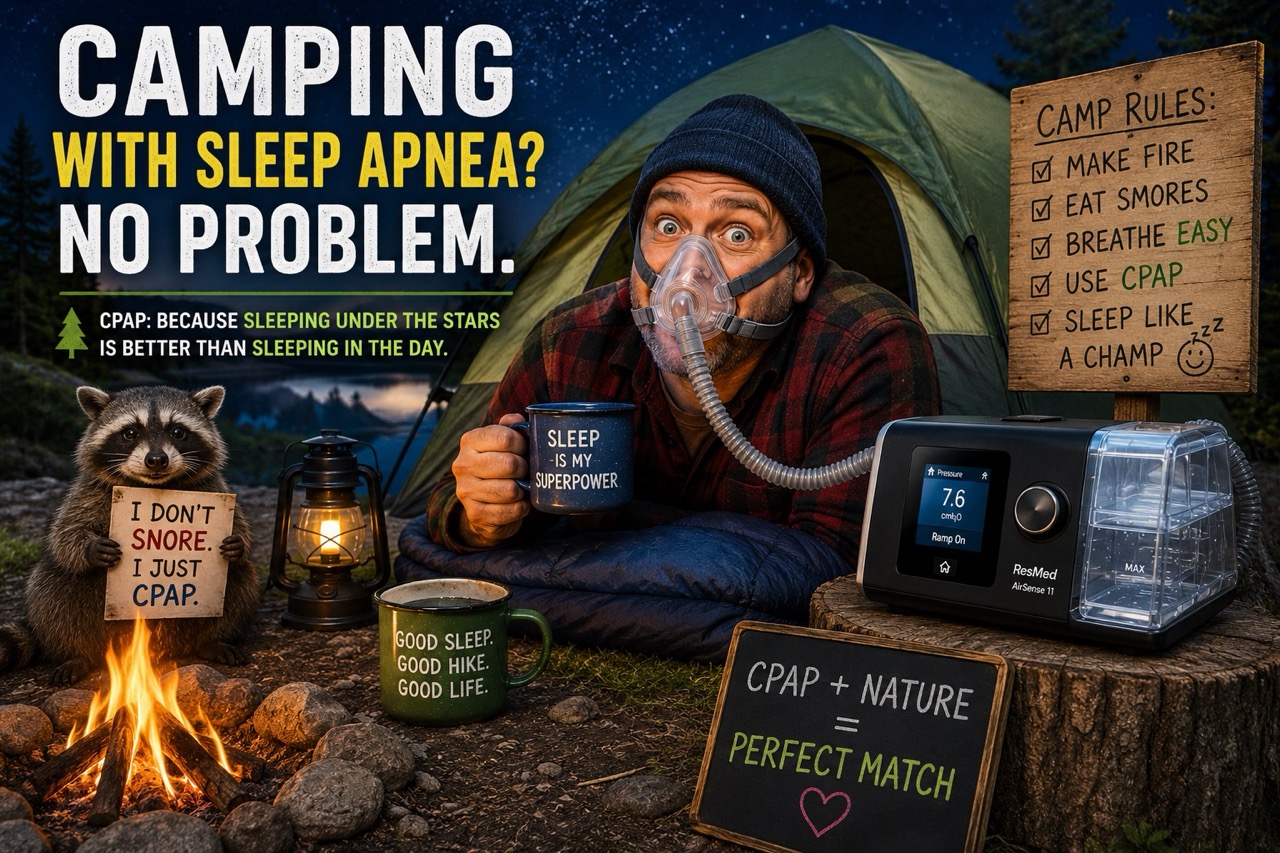
Camping with sleep apnea: using CPAP off-grid
Being diagnosed with sleep apnea does not mean giving up outdoor adventures. Many people assume that CPAP therapy and camping are incompatible, but modern battery technology, portable PAP devices, and efficient power solutions have made it possible to enjoy camping while maintaining effective treatment.
Whether you’re planning a weekend at a campground, a multi-day hiking trip, RV travel, or remote wilderness camping, there are now practical ways to continue PAP therapy away from traditional power sources.
With proper planning, most sleep apnea patients can safely enjoy the outdoors without sacrificing treatment or sleep quality.
Can you camp with a CPAP machine?
Absolutely.
Thousands of CPAP users camp every year.
Modern solutions include:
- Travel CPAP machines
- Dedicated CPAP batteries
- Portable power stations
- Vehicle charging systems
- Solar charging options
The best setup depends on your camping style and power requirements.
Why therapy matters while camping
Some campers consider skipping therapy while away from home.
This may seem convenient, but untreated sleep apnea can lead to:
- Poor sleep quality
- Daytime fatigue
- Reduced alertness
- Headaches
- Snoring
- Increased cardiovascular stress
For outdoor activities that require energy, attention, and physical performance, maintaining therapy can be especially important.
Choosing the right camping setup
Different camping styles require different solutions.
Campground camping
Many campgrounds offer electrical hookups.
In these situations, a standard PAP machine may work perfectly.
RV camping
RV electrical systems often provide multiple power options.
Many RV owners operate PAP equipment directly from:
- Shore power
- Inverter systems
- RV batteries
Car camping
Vehicle-based camping offers additional charging flexibility.
Portable batteries are often sufficient for overnight use.
Remote camping
Backcountry camping usually requires careful attention to:
- Battery weight
- Runtime
- Equipment size
Travel CPAP machines often become especially valuable in these situations.
Travel CPAP versus home CPAP
Many campers choose a dedicated travel machine.
Home PAP machines
Advantages:
- Familiar setup
- Full humidification
- Maximum comfort
Disadvantages:
- Larger size
- Greater weight
- Higher power consumption
Travel PAP machines
Advantages:
- Compact
- Lightweight
- Efficient power usage
Disadvantages:
- Reduced humidification options
- Smaller controls
Both can be effective depending on the situation.
Power options for camping
Dedicated CPAP batteries
One of the most popular solutions.
Benefits include:
- Lightweight design
- Airline compatibility
- PAP-specific compatibility
Portable power stations
Offer:
- Greater capacity
- Multiple charging ports
- Support for additional devices
Ideal for:
- Car camping
- RV travel
- Extended stays
Vehicle charging
Many campers recharge batteries using:
- Cars
- RV systems
- Portable inverters
Solar charging
Solar panels can extend power availability during longer trips.
Performance depends on:
- Weather
- Sunlight conditions
- Charging equipment
Maximizing battery life
Battery management is important during camping.
Strategies include:
Disable heated humidification
One of the largest power consumers.
Disable heated tubing
Further reduces energy usage.
Use efficient PAP settings
Modern travel devices often maximize runtime.
Fully charge batteries
Before departure.
These adjustments can significantly extend battery duration.
How many nights will a battery last?
There is no universal answer.
Runtime depends on:
- Battery capacity
- Pressure settings
- Machine type
- Climate control features
Many systems can provide one to several nights of operation.
Testing equipment before the trip is highly recommended.
Humidification while camping
Humidification presents unique challenges in off-grid environments.
Options include:
Full humidification
Most comfortable but highest power consumption.
Waterless humidification systems
Available on some travel devices.
No humidification
Many campers temporarily disable humidification to maximize battery life.
Personal comfort preferences vary.
Cold-weather camping
Cold temperatures introduce additional considerations.
Potential issues include:
- Reduced battery performance
- Condensation
- Rainout
- Equipment temperature sensitivity
Protecting equipment from extreme cold helps improve reliability.
Packing checklist
Recommended camping supplies:
✓ PAP machine
✓ Mask
✓ Tubing
✓ Power supply
✓ Fully charged battery
✓ Backup battery (if possible)
✓ Filters
✓ Extension cord
✓ Charging equipment
✓ Protective carrying case
Preparation reduces the risk of unexpected problems.
Wildlife and equipment protection
Outdoor environments expose equipment to:
- Dust
- Moisture
- Insects
- Wildlife
Protective storage is recommended whenever equipment is not in use.
Keeping devices clean and dry helps maintain performance.
Emergency planning
Always have a backup plan.
Consider:
- Additional battery capacity
- Alternative charging options
- Vehicle charging capability
- Nearby power sources
Preparation provides peace of mind.
Common mistakes
Underestimating power needs
The most common camping mistake.
Not testing equipment
Always test batteries and devices before departure.
Forgetting spare supplies
Small replacement parts can be difficult to obtain in remote areas.
Ignoring weather conditions
Temperature and humidity can affect equipment performance.
Is camping with CPAP difficult?
For most people, no.
Once a reliable power solution is identified, camping with PAP therapy becomes routine.
Modern travel equipment has made outdoor therapy dramatically easier than it was just a decade ago.
Many users report that camping with CPAP quickly becomes second nature.
Camping with sleep apnea is entirely possible with the right preparation and equipment. Modern travel CPAP machines, dedicated batteries, portable power stations, and efficient power-management strategies allow most patients to continue therapy comfortably in a wide range of outdoor environments. Whether enjoying a campground, an RV adventure, or a remote wilderness experience, sleep apnea treatment does not have to prevent you from exploring the outdoors and sleeping well under the stars.