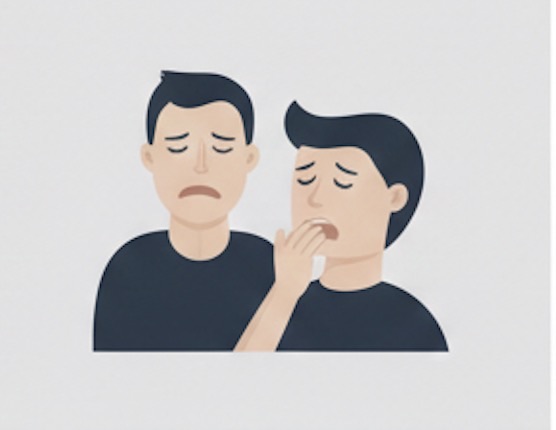
Morning headaches and sleep apnea — what your body may be telling you
You wake up in the morning with a dull headache.
It feels like pressure on both sides of the head.
It may fade within an hour or two.
Painkillers sometimes help, sometimes not.
Many people blame dehydration, stress, or poor posture.
But recurring morning headaches can be linked to disrupted breathing during sleep.
Why sleep affects your head
During healthy sleep:
- Oxygen levels remain stable
- Carbon dioxide levels are regulated
- Blood vessels maintain normal tone
When breathing repeatedly slows or stops during the night, this balance is disturbed.
Two key processes may contribute to morning headaches in sleep apnea.
1. Oxygen fluctuations
In sleep apnea, breathing pauses can cause oxygen levels to drop below normal.
When oxygen falls:
- Blood vessels in the brain may dilate
- Blood flow regulation changes
- The nervous system activates a stress response
Repeated oxygen drops throughout the night can create vascular changes that trigger headache symptoms upon waking.
2. Carbon dioxide retention
When airflow is restricted, carbon dioxide can temporarily rise in the bloodstream.
Elevated carbon dioxide levels:
- Increase blood vessel dilation
- Alter intracranial pressure regulation
- Contribute to pressure-type headaches
This is one reason morning headaches associated with sleep apnea often feel dull and diffuse rather than sharp or one-sided.
What makes sleep apnea headaches different?
Morning headaches linked to sleep apnea often have specific characteristics:
- Present immediately upon waking
- Typically bilateral (both sides of the head)
- Often described as pressure or tightness
- Improve within a few hours
They are not usually associated with nausea, visual disturbances, or sensitivity to light, which are more common in migraine.
However, sleep apnea can worsen pre-existing migraine conditions.
The connection to fatigue
Morning headaches often occur alongside:
- Persistent daytime tiredness
- Loud snoring
- Dry mouth upon waking
- Poor concentration
- Irritability
The combination of headache and unrefreshing sleep is an important pattern.
Why treatment matters
When sleep apnea is properly treated:
- Oxygen levels stabilize
- Nighttime stress responses decrease
- Sleep architecture improves
Many patients report significant reduction or complete resolution of morning headaches after treatment.
This improvement can be a strong indicator that disrupted breathing was the underlying cause.
When should you seek evaluation?
Consider medical evaluation if:
- Morning headaches occur several times per week
- They are accompanied by loud snoring
- Someone has observed breathing pauses
- You wake feeling unrefreshed
- You have high blood pressure
Occasional headaches are common. Persistent morning headaches combined with sleep disruption are not.
The key takeaway
Recurring morning headaches can be more than a minor inconvenience.
They may signal repeated oxygen drops and disrupted breathing during sleep.
If you consistently wake up with head pressure and daytime fatigue, it is worth asking whether your sleep is truly restorative.
Your body may be giving you a warning before more serious complications develop.