Category: Understanding Sleep Apnea

Sleep apnea is more than loud snoring. It is a condition in which breathing repeatedly stops or becomes shallow during sleep, reducing oxygen levels and disrupting restorative rest.

Most people don’t realize it’s happening. The brain briefly wakes the body just enough to restart breathing — often dozens or hundreds of times per night — without full awareness. Over time, this fragmentation prevents deep sleep and places stress on the entire body.

In this category, we explain what sleep apnea is in simple terms, how it develops, the different types (obstructive, central, and mixed), and why it affects energy, mood, metabolism, heart health, and long-term wellbeing.

Because understanding the problem clearly is the first step toward fixing it.

What Does Your Epworth Sleepiness Scale Score Mean?


Your score is more than just a number.

After completing the Epworth Sleepiness Scale (ESS), most people immediately ask:

“Is my score good or bad?”

The answer depends on more than the number itself, but your score can provide valuable clues about how daytime sleepiness is affecting your life.

Let’s break it down.

(more…)
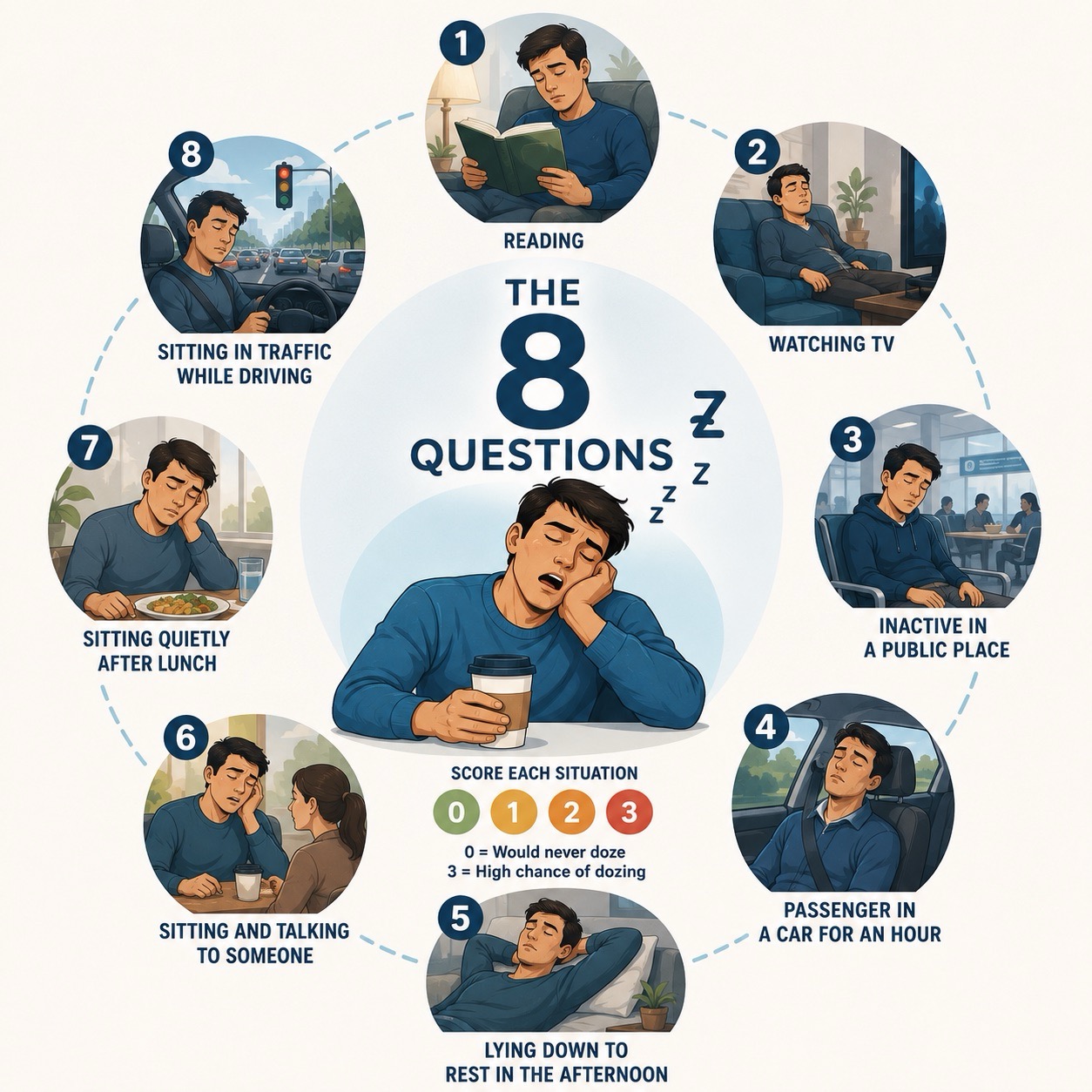
The 8 Questions of the Epworth Sleepiness Scale Explained


Why these eight situations reveal more about your sleep than you might think.

The Epworth Sleepiness Scale (ESS) is one of the most widely used questionnaires in sleep medicine. At first glance, the questions seem surprisingly simple.

Could you fall asleep while reading?

What about watching television?

Or sitting quietly after lunch?

(more…)

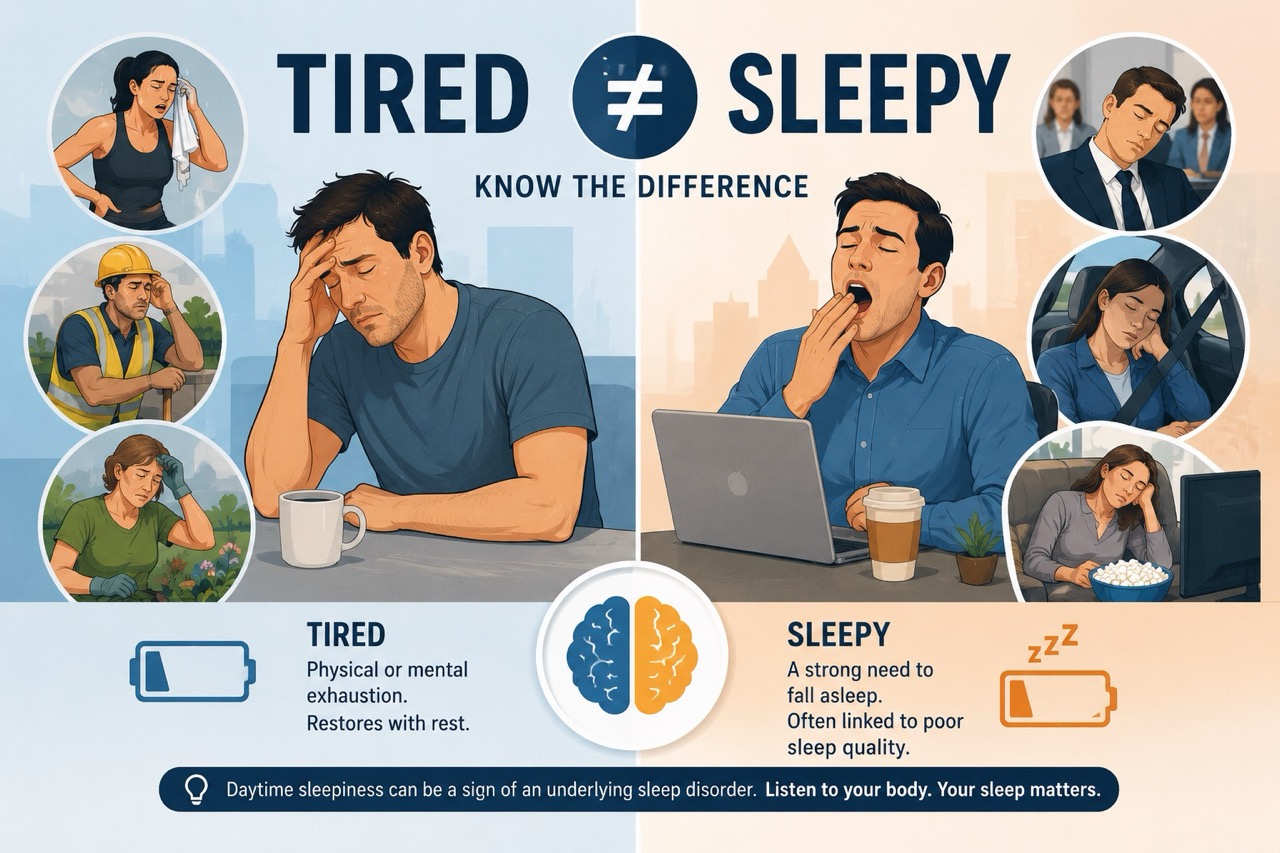
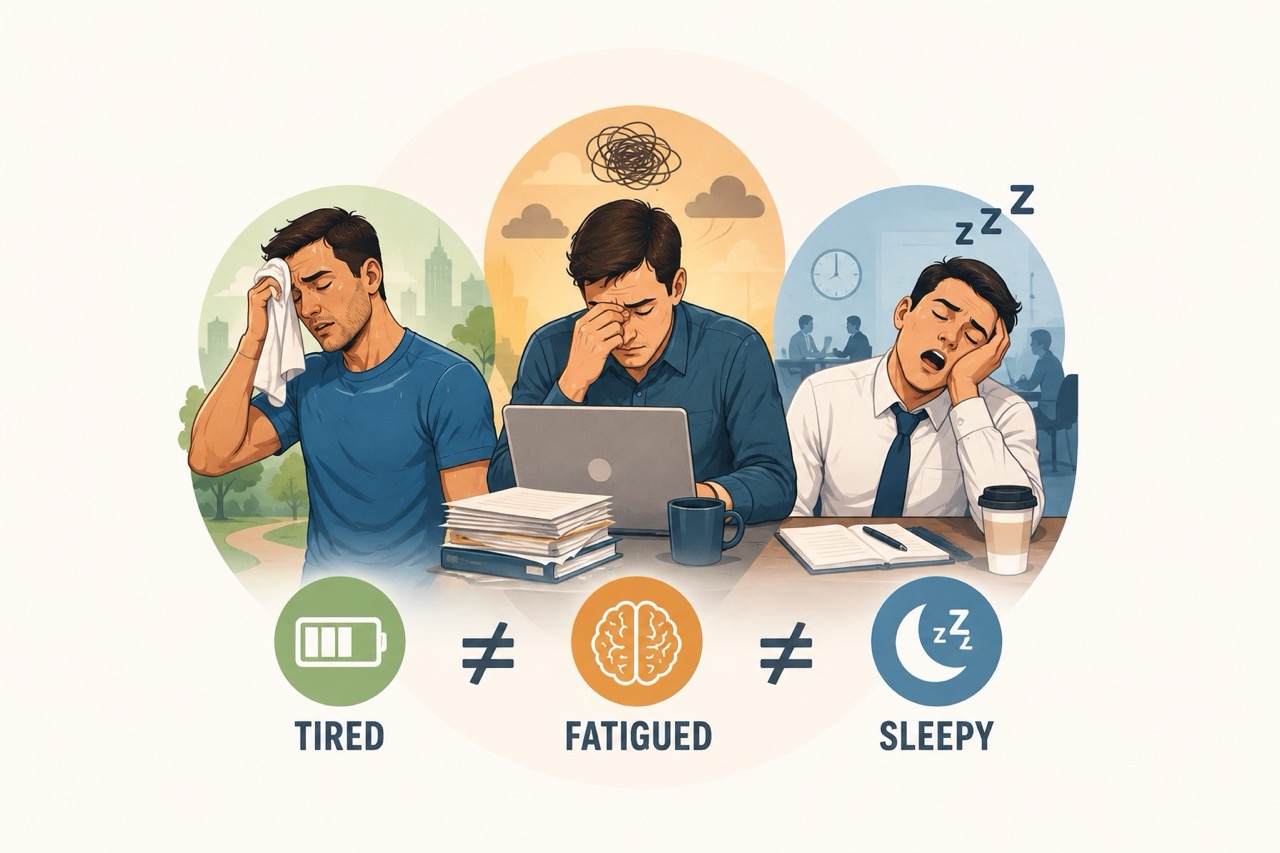
Tired, Fatigued, or Sleepy? Understanding the Difference


“I’m tired all the time.”

It’s one of the most common complaints heard by doctors.

The problem is that “tired” can mean many different things.

You might be physically exhausted after a long day. You might feel mentally drained after hours of work. Or you might be fighting a strong urge to fall asleep while sitting on the couch.

Although these feelings often overlap, they are not the same.

(more…)

Why Feeling Sleepy Matters More Than You Think


The difference between being tired and being sleepy could reveal an underlying sleep disorder.

Most people use the words tired, fatigued, exhausted, and sleepy as if they mean the same thing.

In sleep medicine, they don’t.

(more…)

What Is the Epworth Sleepiness Scale?


One of the most widely used tools for measuring daytime sleepiness.

If you’ve ever searched for information about sleep apnea, chronic fatigue, or sleep disorders, you’ve probably come across something called the Epworth Sleepiness Scale, often abbreviated as ESS.

(more…)

Understanding AASM Guidelines: The Gold Standard for Sleep Apnea Care


Sleep apnea is one of the most common sleep disorders worldwide, yet many people remain undiagnosed for years. Loud snoring, daytime fatigue, morning headaches, and poor concentration are often dismissed as normal consequences of aging, stress, or a busy lifestyle.

To ensure consistent and evidence-based diagnosis and treatment, sleep specialists around the world rely on guidelines developed by the American Academy of Sleep Medicine (AASM). These guidelines represent decades of clinical research and are considered the gold standard for sleep medicine.

(more…)

Understanding AASM Guidelines: The Gold Standard for Sleep Apnea Care


What Is the AASM?

The American Academy of Sleep Medicine (AASM) is the leading professional organization responsible for developing evidence-based standards for diagnosing and treating sleep disorders.

(more…)

When should you see a doctor about your sleep?


Everyone has bad nights. Stress, travel, late dinners — these can temporarily disrupt sleep.

But persistent sleep problems are not normal. If symptoms last for weeks or affect your health, mood, or safety, it’s time to take them seriously.

Below is a clear guide to help you decide when sleep issues require medical evaluation.

(more…)

Sleep disorders compared: how to tell the difference


Many sleep disorders share similar symptoms — fatigue, poor concentration, mood changes, and low energy. But the root causes are very different. Some involve breathing problems, others brain signaling issues, movement disorders, or circadian misalignment. Understanding the differences is the first step toward proper treatment.

Below is a simple comparison to help you see how they differ.

(more…)

Insomnia vs sleep apnea — how to tell the difference


Many people who struggle with sleep assume they have insomnia.

They lie awake, feel exhausted during the day, and conclude:

“I just can’t sleep.”

But not all sleep problems are the same.

Insomnia and sleep apnea are very different conditions. They have different causes, different mechanisms, and different treatments.

Understanding the difference is essential before deciding what to do next.

(more…)