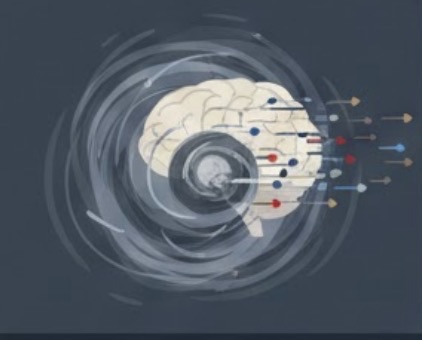
Brain fog, memory problems, and poor concentration — how sleep disruption affects cognitive function
You read the same sentence three times.
You walk into a room and forget why.
You struggle to find simple words during conversations.
Many adults describe this as “brain fog.”
It is often blamed on stress, aging, or workload. But when brain fog becomes persistent — especially alongside poor sleep — disrupted nighttime breathing may be part of the picture.
Sleep is not passive. It is when the brain performs critical maintenance.
What happens to the brain during healthy sleep?
During deep and REM sleep, the brain:
- Consolidates memory
- Processes emotional experiences
- Clears metabolic waste
- Restores neural connections
This process requires uninterrupted sleep cycles and stable oxygen levels.
When sleep is fragmented or oxygen repeatedly drops, these restorative functions are disrupted.
How sleep apnea affects concentration
In sleep apnea, breathing pauses trigger repeated micro-arousals.
Even if you do not remember waking up, your brain repeatedly shifts out of deep sleep.
This leads to:
- Reduced attention span
- Slower reaction times
- Difficulty multitasking
- Decreased executive function
Tasks that once felt simple may require noticeably more effort.
For professionals, this can translate into reduced productivity and increased mistakes.
Memory and learning impact
REM sleep plays a crucial role in memory consolidation.
If REM cycles are shortened or interrupted:
- Short-term memory suffers
- Information retention declines
- Learning efficiency decreases
Over time, chronic sleep disruption can create a persistent sense of cognitive dullness.
This is not permanent brain damage in most cases — but it is reversible only if sleep quality improves.
Oxygen and brain function
The brain is highly sensitive to oxygen levels.
Repeated drops in oxygen during sleep:
- Increase oxidative stress
- Promote inflammation
- Strain small blood vessels
Over years, untreated severe sleep apnea has been associated with increased risk of cognitive decline.
Even milder cases can impair daily mental clarity.
Mood and emotional regulation
Cognitive symptoms are often accompanied by mood changes:
- Irritability
- Low motivation
- Anxiety
- Emotional reactivity
Sleep fragmentation activates stress pathways in the body, keeping the nervous system in a partially alert state.
This makes emotional regulation more difficult.
Many individuals are treated for mood symptoms without evaluating the quality of their sleep.
When should you suspect a sleep-related cause?
Consider evaluation if cognitive symptoms occur alongside:
- Loud snoring
- Witnessed breathing pauses
- Morning headaches
- Persistent daytime fatigue
- High blood pressure
The combination of poor mental clarity and disrupted sleep is an important clue.
The key takeaway
Brain fog and concentration problems are not always caused by stress or aging.
If sleep is fragmented and oxygen levels fluctuate throughout the night, the brain cannot complete its restorative processes.
Persistent cognitive dullness may be a sign that your sleep is not truly restorative.
If you wake up tired and struggle with focus during the day, it may be worth evaluating whether nighttime breathing disturbances are affecting your brain.