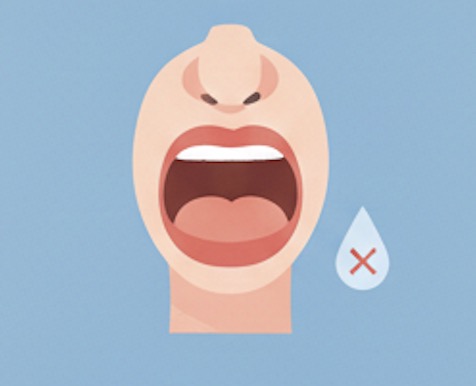
Dry mouth every morning — more than dehydration?
You wake up and your mouth feels dry.
Your throat may burn slightly.
You reach for water immediately.
It happens almost every morning.
Many people assume they are simply dehydrated.
But recurring morning dry mouth can be a sign that you are breathing through your mouth all night — and that may point to sleep apnea.
Why does dry mouth happen during sleep?
Saliva production naturally decreases at night.
However, when you breathe through your nose, moisture is preserved.
When you breathe through your mouth:
• Air continuously passes over oral tissues
• Saliva evaporates
• The throat dries out
• Irritation increases
If mouth breathing continues for hours, dryness becomes noticeable every morning.
How sleep apnea contributes
In obstructive sleep apnea:
• The airway partially or fully collapses
• Airflow becomes restricted
• The body compensates by opening the mouth
• Snoring increases
Mouth breathing becomes a mechanical response to airway resistance.
It is not always conscious.
You may not even realize it is happening.
But the result is consistent dryness upon waking.
Why this matters beyond discomfort
Chronic mouth breathing can lead to:
• Increased risk of cavities
• Gum inflammation
• Bad breath
• Sore throat
• Disturbed sleep quality
Saliva plays a protective role in oral health.
When it is reduced nightly, dental and throat problems become more common.
Dentists sometimes notice the pattern before physicians do.
Clues that dry mouth is sleep-related
Consider sleep apnea if dry mouth appears alongside:
• Loud snoring
• Morning headaches
• Night sweats
• Frequent nighttime urination
• Excessive daytime fatigue
• Waking up unrefreshed
The pattern matters more than the symptom alone.
Can treatment help?
When breathing stabilizes at night:
• Nasal airflow improves
• Mouth breathing decreases
• Dryness often reduces
• Sleep quality improves
Many patients report noticeable improvement in morning dryness after starting sleep apnea treatment.
When to seek evaluation
If dry mouth is:
• Persistent
• Accompanied by snoring
• Associated with fatigue
• Linked to new dental issues
It may be worth discussing sleep health with your doctor or dentist.
Sometimes the symptom feels minor.
But it can be an early clue that nighttime breathing is not normal.
A dry mouth in the morning may seem harmless.
But if it happens every day, it may be telling you that your airway is struggling overnight.
Small symptoms often reveal bigger patterns.